W.P.A. Federal Writers Project, Bloomfield, State of Connecticut
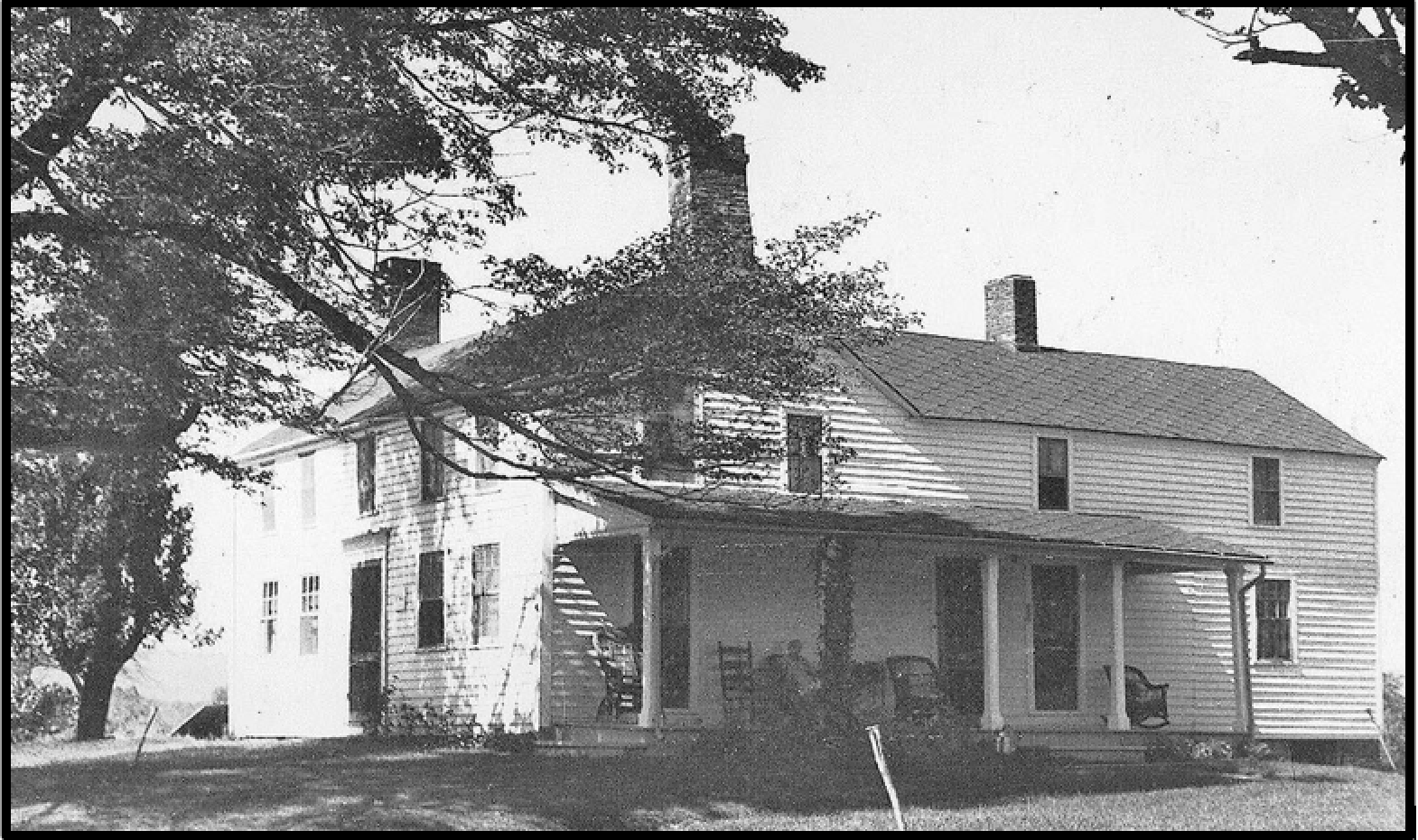
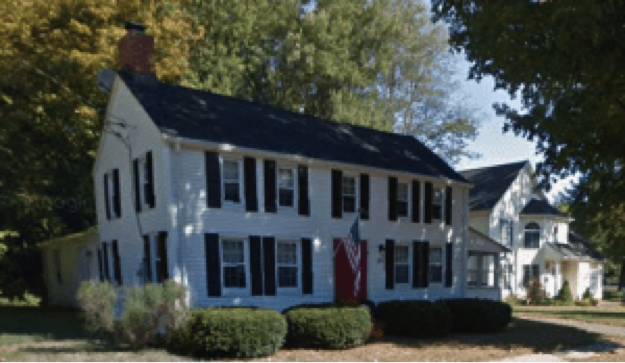
In 1935, the Federal Writers’ Project was created as part of the United States Work Progress Administration (WPA) to provide employment. One of these projects in Connecticut was the Architectural Survey, Census of Old Buildings. According to a description provided by the Connecticut State Library, nearly 5,000 buildings were documented and often illustrated with photographs. Included in this collection is the home (built by/for) my 5th great-grandparents Samuel Eggleston (1747-1837) and Dorcas (Loomis) Eggleston (1752-1834). How cool is it to see the house, which still stands and to know that several generations of the Spencer and Eggleston families lived in the house!
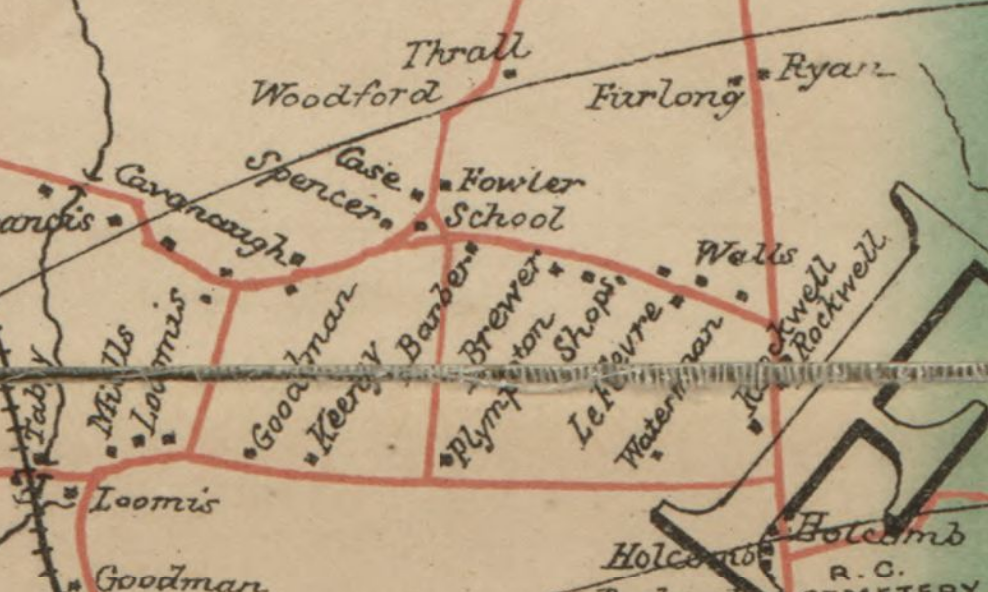
According to a very well informed cousin, this 1886 map of Bloomfield, Connecticut (below) highlights how proximity can be the path to marriage. The Fowler family moved from Suffield, Connecticut to Bloomfield sometime after 1880. In 1889, Minnie M. Fowler married Samuel Spencer from across the road (they are my great-grandparents), and in 1890 George T. Fowler married Eugenia Thrall, from just up the road (my cousins great-grandparents)!
Present Owner[1935-37]: F. L. Putnam; Julia and Frank Spencer
Julia and Frank Spencer were the son and daughter of John W. and Anna Spencer (my 2 great grandparents), their other daughter, Alma Spencer, was married to Frank L. Putnam. (I wonder who is sitting in the shadows on the porch?)
Location:Faces south on Park Avenue, corner of School Street.
Description[Material]: Wood
Roof: Peak(rather flat)
Chimney Type/No.of: Brick / end / 3, 1 in ell
Height: Two stories and half (small)
Ell: 21/2 story rear ell with brick central chimney.
In November 1621, thirty-five colonists on the ship Fortune arrived in Plymouth from England. According to their published accounts, “they found the (Plymouth) settlers in very low condition – many were ragged in apparel and some little better than half naked. The best dish they could offer their friends was a lobster or a piece of fish without bread or anything else but a cup of fair spring water” It is believed that the timely arrival of Fortune ensured the future of the first settlement at Plymouth.
On board the Fortune was my 10th great-grandfather (maternal), William Hilton. Below is a letter that William Hilton wrote to his cousin Anthony Hilton of South Shields, England after arriving in New England.
In 1623, two
more ships, the Anne and the Little James, arrived carrying some 90 new
settlers, including William’s his wife, son and daughter. In 1623/4, William
and his family (including his brother Edward) left Plymouth and relocated to
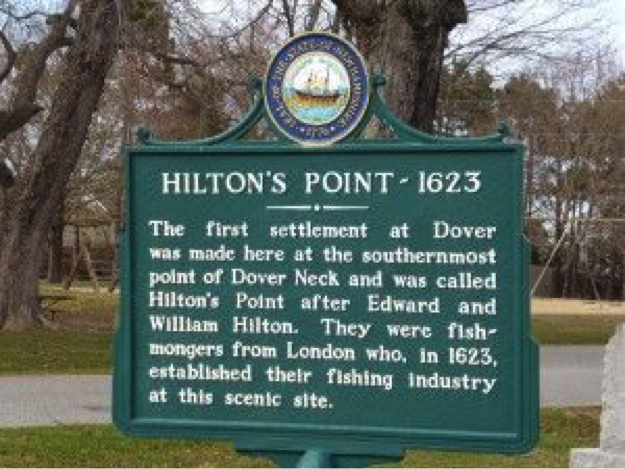
would later be known as Dover, New Hampshire. They were the first
non-natives to settle in this region. William and his brother are often
referred to as the founding fathers of New Hampshire. By 1648, he had moved
approximately 11 miles to Kittery, Maine where he is listed as a tavern keeper
and a ferry operator. “Mr. William Hilton, being licensed for to
keep the ordinary (tavern) at the mouth of the river of Pascataquack and that
none other shall keep any private ordinary there, nor to sell wine, beer nor
liquor upon any pretense.” A year later he was admonished for
not keeping “victual and drink at all times for strangers and
inhabitants.” William died in in 1656 in York, Maine.
Side note: On the return journey the Fortune was captured by French
pirates in the English Channel who pilfered the hold of all the goods.
However, the pirates did not take or destroy the settlers letters. One of
those letters contained the only account of the Pilgrims’ first Thanksgiving
dinner! (Letter from Edward Winslow 11 Dec 1621)
Part II of
this post will focus on the exploration of the Carolina’s by William’s son who
had a head for navigation.
Which Abram Are You?
Between 1803
and 1815, three sets of parents named three babies Abram French. They
were born within 25 miles of each other in the Boston region of Massachusetts
and lived most of their lives in close proximity. One became a crockery
merchant in Boston, another the owner of a leather making factory in Framingham
and the third was a clothing merchant in Lowell. All were very successful
businessmen in the early-mid 1800’s.
While doing
genealogical research, a common name or geographic location can often create a
roadblock or confusion. In this case, I have a clear genealogical record
of Abram French, my 3rd great-grand father. However, I kept coming across
the other Abram’s and wondered if they might be related and/or did they know
each other? It is also fun to imagine that they might have been in
the same place at the same time together. Below is a brief snippet about
each Abram.
(My) Abram French – Born in 1803 in Billerica, Massachusetts the son of Luther French and Sarah Bowers. Married Elizabeth Simonds. He died at Lowell, Massachusetts in April 11, 1879.
I have written about Abram previously, you can read a post on his life and also a separate story about his brother Walter who died in a train crash in Connecticut.
Abram French – Born in
1815 in Chelmsford, Massachusetts to Ephraim French and Rebecca Abrams.
Abram married Sophia Cobb and had 8 children. He died in May 1884 in Jamaica
Plain, Massachusetts. Abram was a very successful crockery, glassware and
china dealer in Boston. This Abram is related to my Abram through their
common 4th great grandfather William French (1603-1681)!
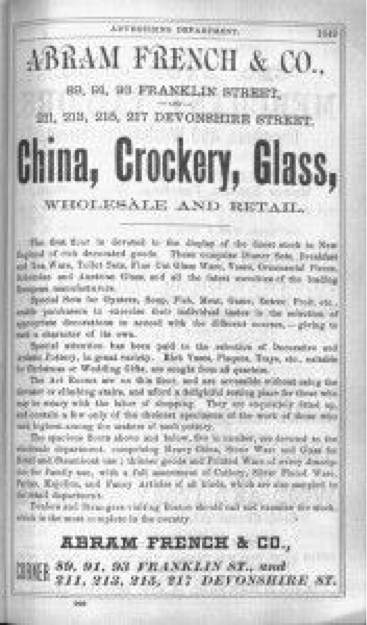
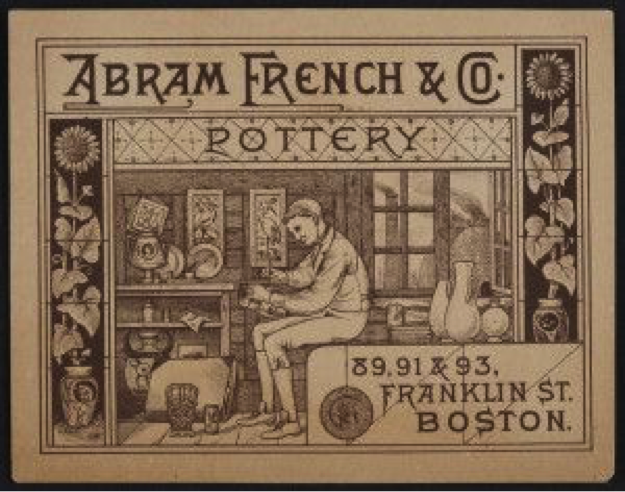
Boston and Bostonians – Abram French & Co. – “One of the finest and
undoubtedly one of the most extensive establishments in this line of trade on
the American continent is the old established. Leading Manufactures and
Merchants of the City of Boston, 1885.”
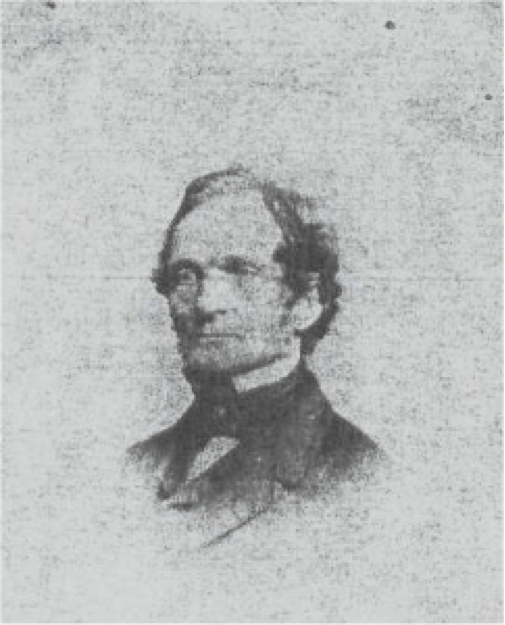
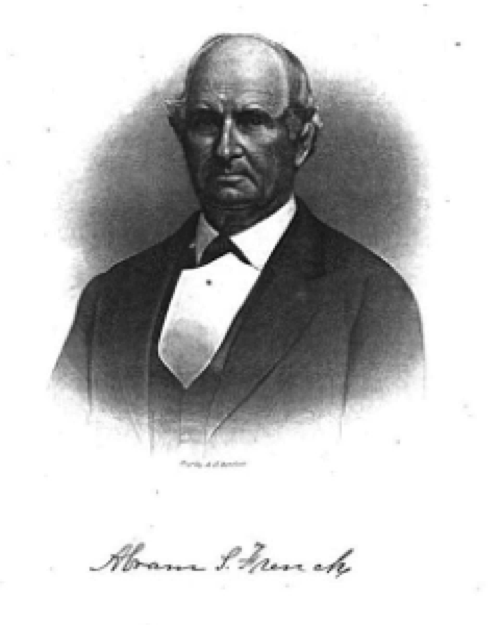
Abram
Stickney French – Born in 1809 in Boston,
Massachusetts to Abram French and Elizabeth Kidder. Abram
married Lois Page Richardson and had 4 children. He died in March 1896 in
Townsend, Massachusetts.
At this time,
I can find no genealogical connection between this Abram S. and my French
family line. However, his wife was from Billerica where another Kidder, a
generation prior, had married someone in my family line. For now, I will
leave Abram S. in the possible column!
Abram S. made one or two voyages to the West Indies as a cabin-boy, but not being pleased with a maritime life he was sent to New Ipswich Academy, where he acquired a good education. He preferred a business life rather than to pursue a course of studies with the view to enter upon one of the learned professions.
In 1833, he
built a morocco factory on the brook running northeasterly from Bayberry Hill
(Framingham), near its confluence with the river, and near where James Giles
built his sawmill. This establishment was in successful operation for twenty
years, employing constantly ten or twelve workmen; and considering the length
of time the business was prosecuted, it must have been a source of wealth to
the proprietor.
Morocco
leather is made from goatskin, it is tougher than sheep or cow skin, and its
denser texture makes it more suitable for being worked into a variety of
products. To produce the distinctive red Morocco color, the untanned but cured
leather is soaked in a dye made from dried insects.
In 1853, he
went to Lockport, NY. and stocked a tannery, where he carried on business
successfully with a partner, to whom he sold his interest in the business in
1858, and removed to Wellsville, N. Y., and built an extensive tannery, and
pursued that branch of industry for several years, doing a large and profitable
business. Partially losing his health, and seeing a good chance to sell out, he
disposed of this factory and its stock in trade and retired from business in
1864.
Mr. French
has always been fond of books, which, during the days of bad health, have been
a source of pleasure to him. He has a retentive memory is well posted on
historical matters and possesses a large amount of miscellaneous information.
He gives liberally to the poor, and enjoys life at his advanced age in a
remarkable manner. He is a member of the Republican Party, and in 1861-62 he
represented the Twenty-seventh District (Ashby and Townsend) in the General
Court.
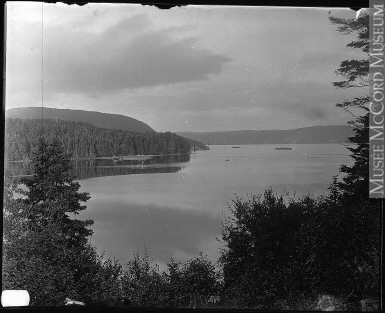
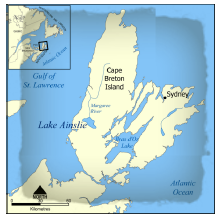
Mouth of North River, Bras d’Or Lake, Cape Breton, NS
While scant information is available, history shows us that Effie MacPherson MacLeod was certainly made of sterner stuff. Effie is my paternal 4th Great Grandmother.
In 1803, six-year old Effie came from the Isle of Skye, Scotland to Prince Edward Island, Canada with her family. Later, with her husband Robert MacLeod, she moved to Lake Ainslie and Pleasant Bay, Cape North and finally Victoria. In 1828, she made the trip from Pleasant Bay to Cape North in an open boat. During that perilous voyage, Effie gave birth in the boat to her son Angus MacLeod. Effie was a midwife and was for a time the only doctor in the Cape North area. According to a history of the region, Effie journeyed on horseback and snowshoes to reach those in need of her services
In
researching Effie, I came across another pioneer midwife who lived in north
Cape Breton during the same period. In Nova Scotia, the story of Granny
Ross is widely known and she is considered to be a “trail-blazer in the
world of women in science.”
During the
learning years of her adult life, Marie-Henriette became aware of her gifts as
a healer and midwife. The legend of Granny Ross began in Little Bras d’Or,
where she cared for and saved the lives of many settlers during a smallpox
epidemic. Since she had already contracted the disease, she was immune to its
effects.
Marie-Henriette
can be considered a pioneer. She did more than just birth children in her
neighborhood. Settlers called on her for miles around and she used her
knowledge of plant medicine in the service of her fellow citizens until she
reached an advanced age. (Library and Archives of Canada)
You fought in the Revolution?
Second Regiment CT. Continental Light Dragoons
My paternal 5th Great-Grandfather, Samuel Eggleston, was born on December 9, 1747 in Windsor, Connecticut. Samuel was the son on Nathaniel Eggleston (1702-1792) and Abigail Goodwin (1708-1801) and the husband of Dorcas Loomis ( 1752-1834).
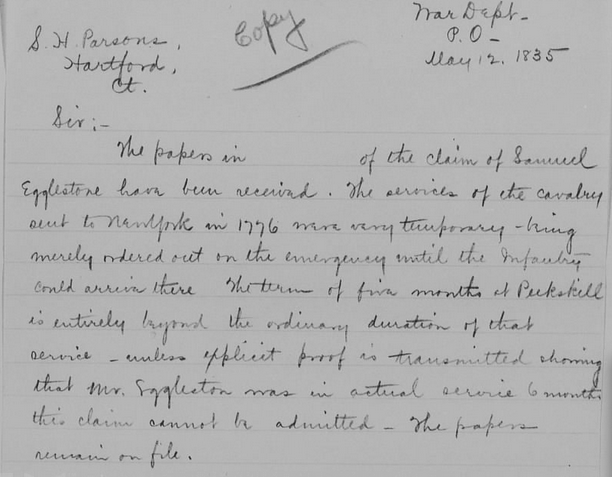
When Samuel was 88 years old, a pension was applied for on his behalf, as provided for by the Pension Benefit Act of 1832. Truth be told, it alleges he did a bit of riding, saw no action and returned home. The application claimed he was a soldier during the American Revolution. The petition states, that he entered the service of the United States as a private in a company of dragoons commanded by Captain Thomas Seymour, Lt. Reuben Ellsworth and Colonel Edward Griswold at Windsor in the County of Hartford in the State of Connecticut. He marched from Hartford, Connecticut to the Peekskill in State of New York and in a few days crossed the Hudson River and proceeded to Hackensack and afterward Newark, then to Elizabethtown, then to New Brunswick and eventually New York. He went with the company many places that the names of which he has entirely forgotten, – and returned in a different route to the Hudson River above Peekskill where they crossed the river where deponent was discharged in a place near Peekskill in the State of New York by General Charles Lee and returned home sometime (he is pretty certain) the later part of December 1776.
After review, the petition was rejected stating that Samuel “failed to furnish satisfactory proof” of his service. There was no record that the decision was contested.
On June 7,
1832, Congress enacted pension legislation extending benefits more universally
than under any previous legislation. This act provided for full pay for life
for all officers and enlisted men who served at least 2 years in the
Continental Line, the state troops or militia, the navy or marines. Men who
served less than 2 years but at least 6 months were granted pensions of less
than full pay. Benefits were payable effective March 4, 1831, without regard to
financial need or disability and widows or children of were entitled to collect
any unpaid benefits due from the last payment to a veteran until his death.
Everyone who claimed benefits under this act were required to relinquish their
claims under any prior federal or state pension laws, but by amendment on
February 19,1833, invalid pensioners were exempted from the operation of this
release of their prior pension benefits. Source
John William Spencer
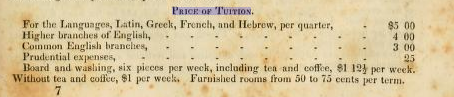
Connecticut Literary Institution 1836 – Tuition
Students at the Connecticut Literary Institution
The following is a brief glimpse into the life of my 2nd great-grandfather, John William Spencer (1834-1896) who was known to have resided in Hartford and Bloomfield, Connecticut. John (or J.W.) was the son of a grocer and as a youth attended the Connecticut (Baptist) Literary Institution in Suffield, Connecticut. The Institute was a private, non-denominational school for young men founded in 1833 and within ten years opened its doors to young ladies. The Institute further showed its progressive nature when, by the late 1800’s, African-American boys and girls were admitted. Renamed the Suffield School, it served as a high school for local students from 1897 until 1939, and again altered it name and to this day is known as the Suffield Academy.
Side notes:
Rev. Gustavus
Davis, the founding member of the Institute, presided over the marriage of
John’s parents, Abiram Spencer and Emily Ann Waters on December 8, 1833.
1840 Letter referencing the
Institute’s Reading Room being provided with anti-slavery newspapers from the Boston Female Anti Slavery Society. (Source: Mr. Sullivan’s Digital Classroom)
Who would of thought the inventor of basketball, James Naismith, also invented the football helmet after an incident at the Institute in 1891!
Description of Images
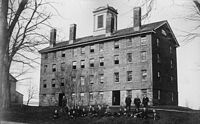
Students at
the Connecticut Literary Institution in Suffield pose in front of the CLI’s
“Old South” building, in the late 1800’s. (Source: Kent Memorial Library – Suffield)
Price of Tuition – Triennial Baptist Register 1836 (Source: InternetArchive)
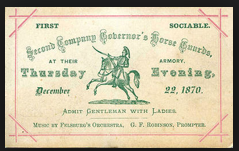
According to public records, John briefly was a food buyer for fruit boats sailing from New York City to the West Indies. This job might have been associated with his father’s business, Spencer and Gridley Grocers, located in Hartford. According to the 1860 census, at the time he was twenty-six, a farmer, and married to seventeen year-old Anna Eggleston and living with her family in Bloomfield, CT. Records indicate that he studied law and later became a judge. John was noted to be a fine horseman and a member of the Governor’s Horse Guard, the link below provides a bit of history regarding this ceremonial unit.
Connecticut Governor’s Horse Guards
The outbreak
of the Civil War naturally turned the eyes of the people to more serious
military duties than those exemplified by the Governor’s Guards. The Horse
Guard did not vote to offer its services for active duty but several members
joined the volunteer companies which were being formed over night. Some served
for the first short three months period only, others stayed in service through
to 1865.
With peace
came a renewal of interest in the more ostentatious forms of military display.
The Hartford Times of May 2, 1867, records the inaugural parade with the
comments: “Major James Waters is one of the best cavalry commanders we have ever
seen in our streets and the condition of his company shows that it is well
commanded.”
During the
next twenty years, aside from the inaugural parades, the Horse Guards formed a
part of the escort for President Johnson in June, 1867; for General Sheridan in
October of the same year; and in August, 1874, for ex-Governor Marshall Jewell
on the occasion of his return from a diplomatic mission in Russia. Major
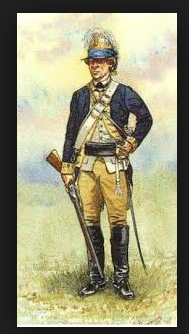
Boardman had just secured new uniforms: bear-skin cap ornamented with a rosette
and gilt eagle, dark blue single breasted coat with brass buttons, and trousers
of sky blue doeskin with straps under the instep; all trimmed with orange
colored piping. The officers substituted the more comfortable chapeaux for
the ‘bear skins, and buff colored doeskin breeches “worn inside of top
boots,” for the less elegant trousers. The members liked the new get-up
and paraded eighty strong.
Among the
enlisted personnel at that time (1874) were: J. W. Spencer
Question:Was Major James Waters a relative of John’s mother, Emily Ann Waters?
On the afternoon of November 15, 1924, my grandparents, Gladys May Spencer (1898-1984) and George Bradley French (1898- 1983) were married at the Blue Hills Baptist Church in Hartford, Connecticut. Recently, I obtained their marriage certificate and a wedding program containing signatures of those on attendance. Those signing the guest book included my great grandmothers Minnie Fowler Spencer and Mary McEachern French! In addition, there was also a small 1923 calendar, where Gladys noted, item-by-item, the costs of her wedding dress, her bridesmaids dresses and other wedding expenses.
Gladys and Walter were divorced prior to 1940. They had one son together, John Spencer French, born 1931.
Snippet from the 1923 Calendar
White Dress – Materials $15.80/Shoes $7.75/Garters $1.25
(A full and unabashed disclosure upfront, any connection that I have to Abolitionist John Brown and U.S. Presidents U.S. Grant and Rutherford B. Hayes are distant. For example, John Brown is a 3rd cousin/5 times removed. Third cousins share a second great-grandparent as their most recent common ancestor. “Removed” is used when two persons share a set of ancestors but are not the same number of generations (in my case 5 generations “removed”) in descent from those ancestors.
Mary and John
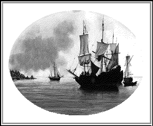
On March 20, 1630, a ship called the “Mary and John” sailed from Plymouth, England, carrying 140 persons bound for New England in the American colonies. On May 30, 1630 they landed at Nantasket, Massachusetts. Among these passengers were Matthew Grant, Michael Humphrey and Bygod Eggleston. (Bygod is my 9th great paternal grandfather) The Grant, Humphrey and Eggleston families briefly lived in Dorchester, Massachusetts and in 1635 relocated to establish Connecticut’s first English settlement, the town of Windsor. Michael Humphrey was a pitch-and-tar manufacturer who received land title in 1647, the same year he married Matthew Grant’s daughter Priscilla. Matthew Grant was the land surveyor for Windsor and served as the towns second Town Clerk. (Matthew Grant Diary)
President Ulysses S. Grant was the 4th great-grandson of Matthew Grant (1601-1681) and Priscilla Grey (1601-1644). Grant was a U.S. military leader and the eighteenth President of the United States. He was born Hiram Ulysses Grant on April 27, 1822, in Point Pleasant, Ohio. In 1839, he received an appointment to the United States Military Academy at West Point. The congressman who appointed Grant submitted his name as Ulysses Simpson Grant rather than Hiram Ulysses Grant. It was because of this mistake that Grant changed his name.
In the years before the Civil War, Grant lived much of the time in St. Louis, Missouri, working as a real estate agent and as a farmer. He failed in both of these businesses. After the Battle of Fort Sumter in April 1861, Grant volunteered for military duty. He first served as colonel of the Twenty-First Illinois Infantry but soon was promoted to the rank of brigadier general due to his previous military experience. In February 1862, Grant led a Union force that captured Forts Henry and Donelson. He earned the nickname “Unconditional Surrender Grant” for demanding the unconditional surrender of the Confederate soldiers inside of these fortifications. In March 1864, President Lincoln promoted Grant to lieutenant general and named him supreme commander of all Union forces. Grant focused his attention on General Robert E. Lee’s Army of Northern Virginia. By early June 1864, Grant had surrounded Lee’s Army of Northern Virginia at Petersburg, Virginia, and a ten month siege ensued. The Northerners finally drove the Confederates from Petersburg in early April 1865, and The Army of Northern Virginia surrendered on April 9, 1865.
Grant served as President of the United States from 1869 to 1877. Grant worked to advance the South’s Reconstruction and supported the enactment of the 15th Amendment to the Constitution, which stipulates that “right of citizens of the United States to vote shall not be denied or abridged . . . on account of race, color, or previous condition of servitude.”
Hiram Ulysses GRANT is my 5th cousin -1 time removed of wife of 3rd great-grandfather. Our common ancestors are Matthew GRANT and Priscilla GREY.
President
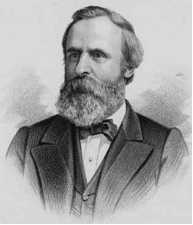
Rutherford Birchard Hayes was born in Delaware, Ohio on October 4, 1822. Hayes was educated at Kenyon College and
Harvard Law School. After five years of law practice in Lower Sandusky, he
moved to Cincinnati, where he flourished as a young Whig lawyer.
He fought in the Civil War, rose to the rank of brevet major general, had four horses were shot from under him, and he was wounded five times. In 1864, Hayes was elected to Congress, from the Second Ohio District. He was not present during the campaign, and after his election had to resign his commission in the army. In 1867, Gen. Hayes was elected Governor of Ohio. He was elected Governor for the third term in 1875 Beneficiary of the most fiercely disputed election in American history, Rutherford B. Hayes brought to the Presidency dignity, honesty, and moderate reform. He was elected in 1876 and inaugurated on Monday, March 5, 1877. To the delight of the Woman’s Christian Temperance Union, Lucy Webb Hayes carried out her husband’s orders to banish wines and liquors from the White House. Hayes had announced in advance that he would serve only one term, and retired to Spiegel Grove, his home in Fremont, Ohio, in 1881. He died in 1893.
Rutherford B. HAYES is my 3rd cousin 1 time removed. Our common ancestors are George HAYES and Abigail DIBBLE.
“The crimes of this guilty land will never be purged away, but, with blood.” John Brown, 2 December 1859
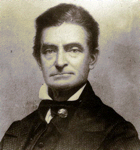
John Brown, son of Owen Brown was born in West Torrington, Litchfield County, Connecticut on May 9, 1800 and died December 2, 1859 in Charles Town, Virginia (West Virginia). On August 30, 1856 he led his men to battle slaveholders in Osawatomie, Kansas. On October 16, 1859 with his sons and other men he seized the U. S. Armory at Harper’s Ferry, Virginia. He was hanged on December 2, 1859 in Charleston, Virginia, the only man ever executed for treason against an American state. This famous abolitionist is celebrated in the song, “John Brown’s body lies a-molderin’ in the grave, but his truth goes marching on.” Three years after John Brown’s martyrdom, Abraham Lincoln emancipated America’s slaves.
John BROWN is my 3rd cousin – 5 times removed. Our common ancestors are Jonathan HUMPHREY and Mercy RUGGLES.
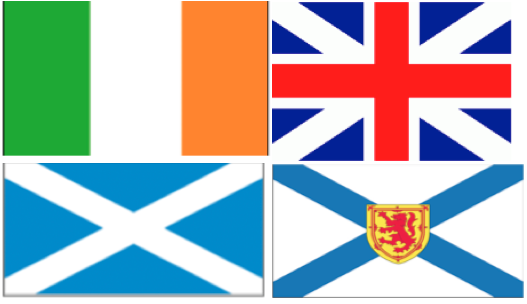
The MacEachern, MacLeod and MacPherson families emigrated to Nova Scotia from the highland region of Scotland. The first Highland Scots came to Canada in late 1700s to escape oppression by the Lowland government. The second wave occurred from 1783 to the early 1800s, when poor economic conditions in the Scottish Highlands saw tenants abandoning their land and leaving for North America.
Duncan MacEachern was born at Lake Ainslie, Nova Scotia in 1845 to John and Catherine MacEachern. Scant information is available regarding the MacEachern’s arrival in Canada. A highly regarded history of Inverness County, NS makes reference to Duncan’s father, “What is known as Glebe Farm at West Lake Ainslie was formerly owned by John MacEachern, who rejoiced in the sobriquet [nickname] of ‘Yellow Top’ He had a large family but all traces of him have long since disappeared.” History of Inverness County Nova Scotia (1922).
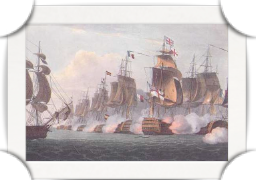
Battle of Trafalgar
In 1870, Duncan MacEachern married Mary Maloney whose child Mary would later marry Walter French. Mary (Maloney) MacEachern’s grandfathers, Dennis Maloney and Robert MacLeod, were interesting characters in the history of Nova Scotia. Dennis Maloney, a sailor in the British Royal Navy, was born in the Ulster Province of Ireland and drowned during the Battle of Trafalgar (1805). Mary’s other grandfather, Robert MacLeod, came from Scotland in 1828 and was known as an early settler of Northern Cape Breton.
Mary MacEachern’s grandmother was Effie (MacPherson) MacLeod. In 1803, Effie’s father, Norman MacPherson, had sailed on the ship Polly to Prince Edward Island in Canada. Effie was six years old when she left Skye, Scotland and came to PEI, Canada . Effie worked as a midwife, sometimes via snow shoes and horseback. (See Post: Special Delivery – Nova Scotia)
“Pioneer Robert MacLeod and his wife Effie MacPherson, came to Cape North from Scotland by way of P.E. Island, Lake Ainslie and Pleasant Bay. They lived at Lake Ainslie for a few years. their son Donald was three years old they moved to Pleasant Bay, and ere long to Cape North, in 1828.” Cape North and Vicinity by Rev D. MacDonald (1933) p. 83
MALONEY FAMILY LINE Dennis Maloney (1775 IRE -1805 at sea) – Sarah Ransome (1779 Scot. – 1810) George Maloney (1801 NS -1877) – Mary McLeod (1814 PEI) Mary Maloney (1840 NS–1898) – Duncan MacEachern (1845 – ?)
MACPHERSON FAMILY LINE Norman MacPherson (?) – Christy Cely (?) Donald MacPherson (b. Scotland d. Prince Edward Island) – Mary MacPherson Robert MacLeod (1789 Isle of Skye, Scot. – 1857 NS) – Effie MacPherson (1797 Isle of Skye, Scot. – 1891) Mary MacLeod (?)– George Maloney (1801 Ireland – 1877)
MACEACHERN FAMILY LINE John MacEachern (?) – Catherine (?) Duncan MacEachern (1845 NS–?) – Mary Maloney (1842 – 1898) Mary MacEachern (1872 NS –?) – Walter French (1875 – ?)
Bygod – It is the Eggleston’s!
Windsor, Ct. Settled 1633
Bygod (Bigod, Begat, Baggot) Eggleston was baptized on 20 February 1586/7 in All Saints Church at Settrington, England. In 1630, he sailed to America with his family on the Mary and John, a 440 ton ship with 140 passengers aboard. The ship departed Plymouth, England, on the 20th of March and arrived 70 days later on May 30th at Nantasket, Massachusetts. Those on board are referred to as the Dorset Pilgrims. The Eggleston’s were followers of a Puritan leader, Reverend John Warham, who disagreed with the leadership of Governor John Winthrop of the Massachusetts Bay Colony. Winthrop believed that government should be run by only a few people, whereas the Reverend John Warham thought it should be run by the people via a freely elected leader. In 1635, Warham’s Dorchester group of about 140 people relocated to the frontier of Windsor, Connecticut.
Bygod Eggleston and his son James were admitted as freemen
of Connecticut Colony in May 1657. A copy of Bygod’s will and final testament
are attached to this document. The Eggleston family is linked to the French
family line as a result of the marriage of Anna Eggleston to John William
Spencer, whose granddaughter, Gladys Spencer married George French.
Bygod Eggleston is my 9th great paternal grandfather.
An expert in population studies has estimated that Bygod Eggleston was the progenitor of no less than twelve million American-born descendants.
Notable ancestors from the Eggleston-Spencer line include President U.S. Grant, President Rutherford B. Hayes and abolitionist John Brown.