The latest podcast by Jake Sconyers and Nikki Stewart at HUB History, The Original War on Christmas, is a well-researched story that prominently features the sermons of Increase and Cotton Mather. Definitely a must-listen this holiday season for history buffs.
Celebrating Christmas was against the law for decades, and it was against cultural norms for a century or more. What were the Puritans’ theological misgivings about Christmas? (The Original War on Christmas)
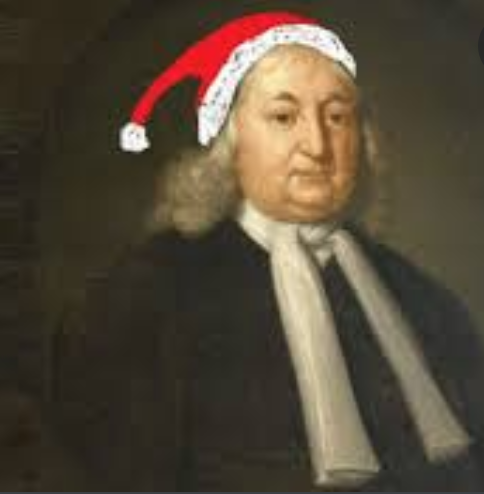
Puritan Minister Increase Mather (1639-1723) is my 8th great paternal grandfather and his son, Cotton, would be my 7th great-uncle. (My post about Increase Mather’s role in the Salem Witch Trials and his service as president of Harvard College – In Cases of Conscience, Increase Mather)
Quotes from Increase Mather expressing his beliefs about Christmas:
Christmas occurred on December 25 not because “Christ was born in that month, but because the heathens’ Saturnalia was at that time kept in Rome, and they were willing to have those pagan holidays metamorphosed into Christian [ones].”’
He referred to December as Mensis Genialis, ‘the Voluptuous Month.’
“Can you in your Conscience think, that our Holy Savior is honoured,” he lectured, “by Mad Mirth, by long Eating, by hard Drinking, by lewd Gaming, by rude Revelling; by a Mass fit for none but a Saturn, or a Bacchus, or the Night of a Mahometan Ramadam?” “You cannot possibly think so!“
Nathaniel Bowman, my 9th great grandfather (paternal) was born in Leek, England in about 1605 and immigrated to the Massachusetts Bay Colony in I630. Nathaniel, a yeoman, was one of the original settlers of Watertown, Massachusetts. In 1652, Nathaniel moved to the Shawshine division in Cambridge (Lexington) where he farmed on 20 acres. Descendants of Nathaniel resided in Lexington for over 250 years and his g-g-grandson Ebenezer Bowman was one of the militia that stood on Lexington Common (only 17 years old) and witnessed the “shot hear round the world.” (Check out this previous post: The Shot Heard Round Buckman Tavern)
“There is also no evidence that (Nathaniel) Bowman ever joined the church in Watertown or Cambridge; this is partly indicated by the fact that he applied for freemanship in 1630, but never became a freeman, which after May 1631 required church membership.” (Great Migration Study Project)
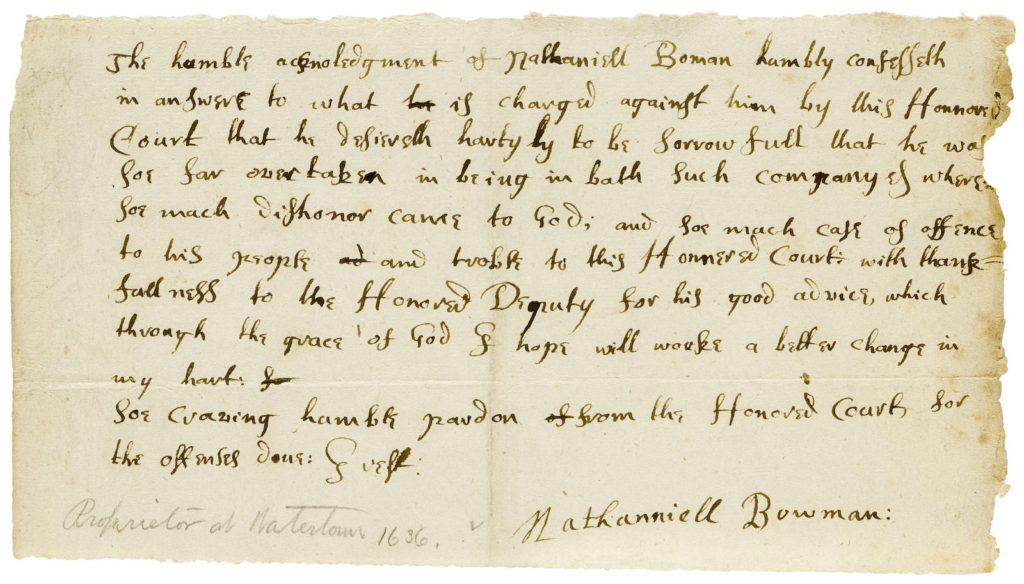
Nathaniel’s story, while remarkable in his decision to risk venturing across the ocean to start a new life, was largely uneventful with little actual documentation. What makes him interesting is the mystery of a court confession attributed to him and sold at auction for $2,000 in 2016.
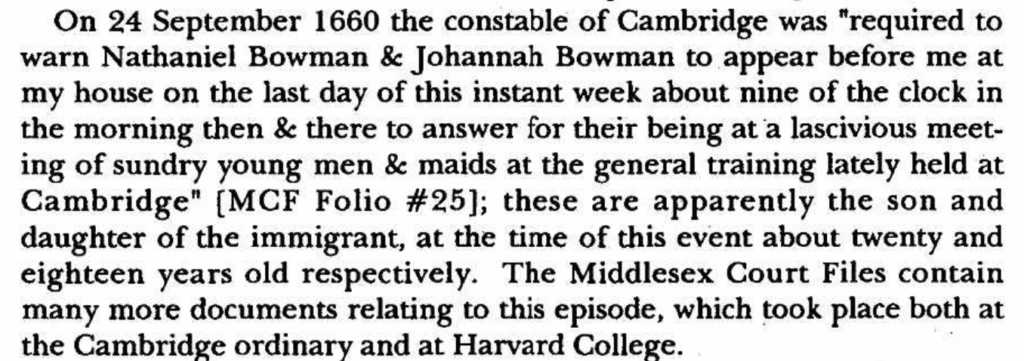
However, the true culprits appear to be his son Nathaniel Jr. (1641-1707) and his daughter Johanna (1642-1682), Cambridge “townies,” who were caught carousing with Harvard University students in 1662. They were ordered to appear before the Middlesex Court, as described below, that later resulted in a signed confession by Nathaniel Jr. I was unable to uncover a record of any fines or other punishment by the court against Nathaniel or Johanna.
The Great Migration Begins
Confession
An edited version of the document reads: “The humble acknowledgment of Nathaniel Bowman humbly confesses in answer to what is charged against him by this Honored Court that he desires heartily to be sorrowful that he was so far overtaken in being in both such company & whereas so much dishonor came to God; and so much ca[u]se of offence to his people and trouble to this Honored Court; with thankfulness to the Honored Deputy for his good advice, which through the grace of God I hope will work a better change in my heart. So craving humble pardon from the Honored Court, for the offenses done.”
Comments, corrections and and suggestions appreciated.
I have been fortunate in the exploration of my family history to uncover individuals who bravely faced the British on the Lexington Common and documented others who served in World War I and II, the Korean War and Spanish-American War. I have shared stories about individuals who worked as midwives, farmers, tavern owners, tailors, preachers, teachers, and many who were elected to serve their communities or faith.
My family tree consists of well over 1,000 individuals and a couple branches extend over 10 generations. Until now, I never crossed paths with an individual whose actions were so abhorrent that I wish I could just shake from my family tree. The person that I am referring to is George Mitton, my 10th great grandfather, who was born 25 August 1617 in Shrewsbury, England and died in 1660 in Falmouth, Maine.
George Mitton was married to Elizabeth Cleeve (1619-1691). Elizabeth’s father, George Cleeve, came to New England in 1630 and in 1632 established a settlement called Casco, later to be named Portland, Maine. George was also commissioned as Deputy President of the Province of Lygonia. A statue of George Cleeve stands on the Eastern Water front on private land in Portland. The statue was not accepted by the city council who claimed, without evidence, that Cleeve may have owned a slave.
The Great Migration Begins by Robert Anderson, pp. 385-6
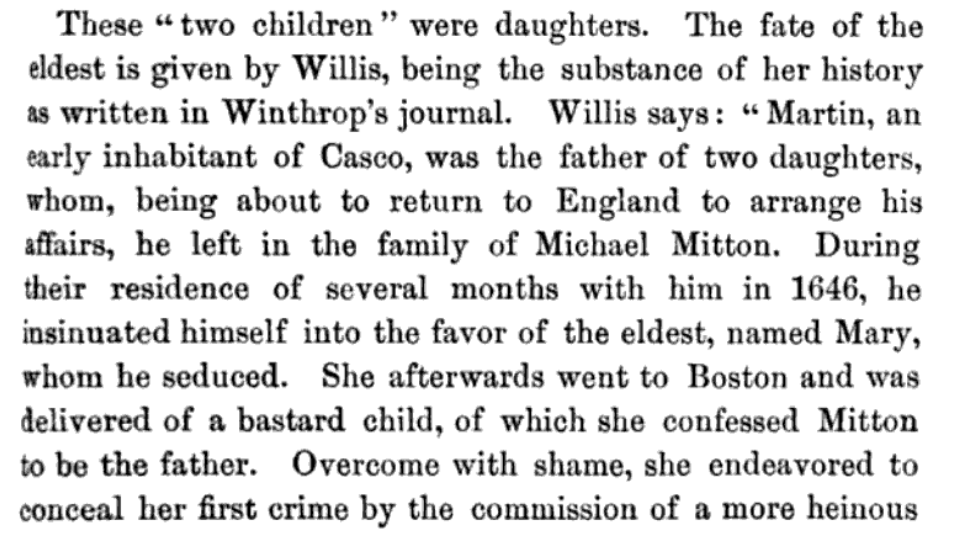
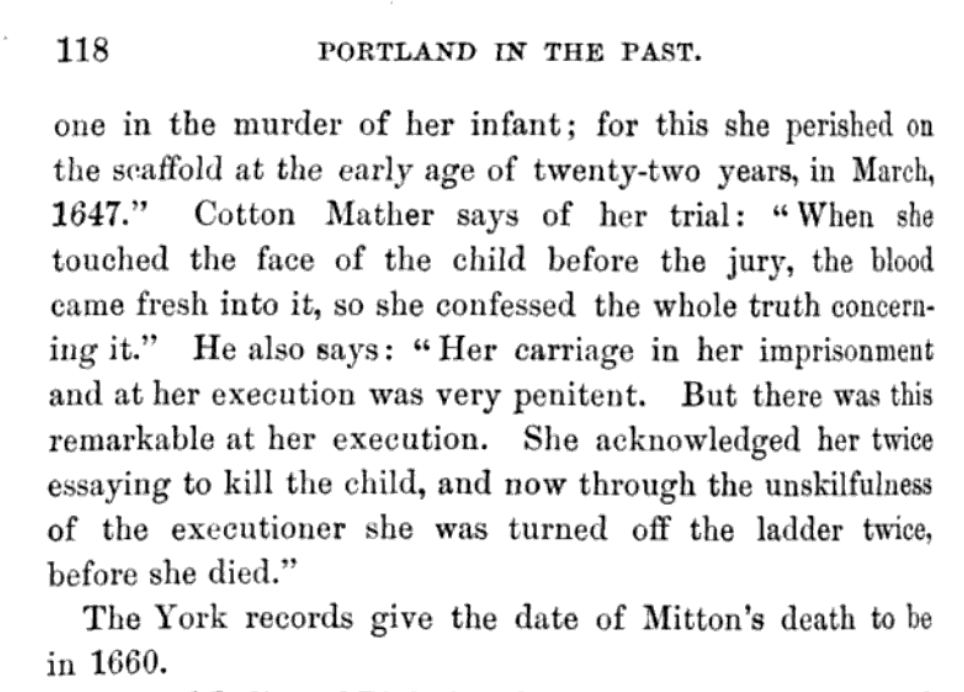
The following is the sordid tale of George Mitton and his betrayal of his neighbor Richard Martin, which led to the death of a child and the hanging of Mary Martin. Richard Martin, a destitute merchant, returned to England and placed his daughter Mary in service as a servant to his neighbors, George and Elizabeth Mitton. Mary was 22 at the time and George (29) proceeded to “seduce” her, resulting in her becoming pregnant and later taking the life of her own child. There is no record of George Mitton suffering any consequences for his adultery, the death of his child or actions that led to the death of Mary Martin.
Portland in the Past by William Goold (1886)
Comments, corrections and and suggestions appreciated.
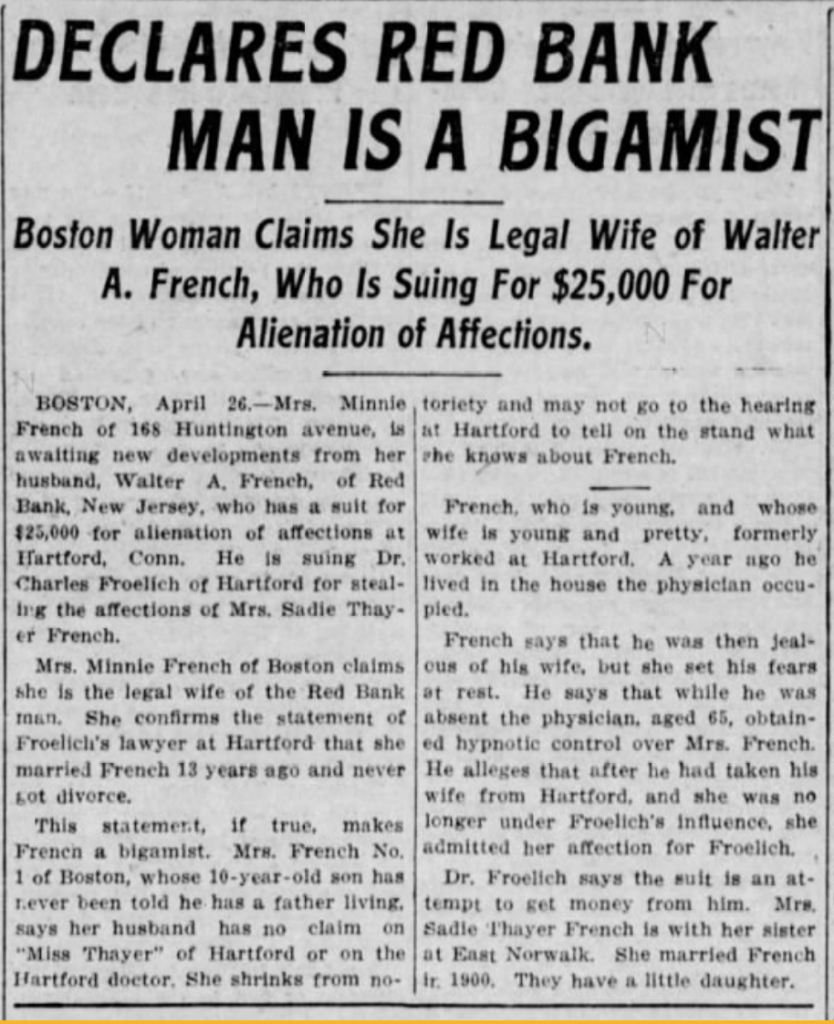
How is that to catch your attention? The person making the declaration was my great grandmother Mary “Minnie” MacEachern French who was calling out her husband, Walter A. French, for being a bigamist. The irony in all of this is that Minnie was, just a few years later, involved in a sensational court case against a wealthy Bostonian for breach of promise – to wed! Into the Breach-Promises, Promises. The newspaper articles highlighted in this post can be viewed in their entirety below. They are a great read!
Walter’s Tale
Walter Abram French was born in January 1877 to Horace and Laura Foster French in Medford, Massachusetts.
May 1896, his mother, Laura French, passed away.
April 1897, Walter marries Minnie MacEachern. (Hello Minnie)
January 1898, Walter has a son (my grandfather), George French, in Boston with Mary “Minnie” MacEachern. Minnie, originally from Nova Scotia, was working as a dressmaker in Boston. Walter was employed as a wagon maker.
June 1899 – Birth of Horace French to Walter and Minnie. No additional record of Horace has been discovered, he likely died as an infant.
1899/1900 – Walter abandons Minnie and Walter and moves to New York.
1903 – June – Walter marries Sadie Elizabeth Thayer in New York. They have a son, Walter Cornelius, born in November 1903.
1907 – Walter, Sadie and Walter Jr. move to Hartford, Connecticut. (1907/8 – at some stage they board at home of Dr. Froelich)
1908 – In Hartford, Walter files for bankruptcy with business partner James Tilden (d.b.a. Auto Body and Top Manufacturing Company). Walter claimed that Tilden had assumed all financial responsibilities and he did not respond to additional court inquiries.
1909 – Sadie separates from Walter.
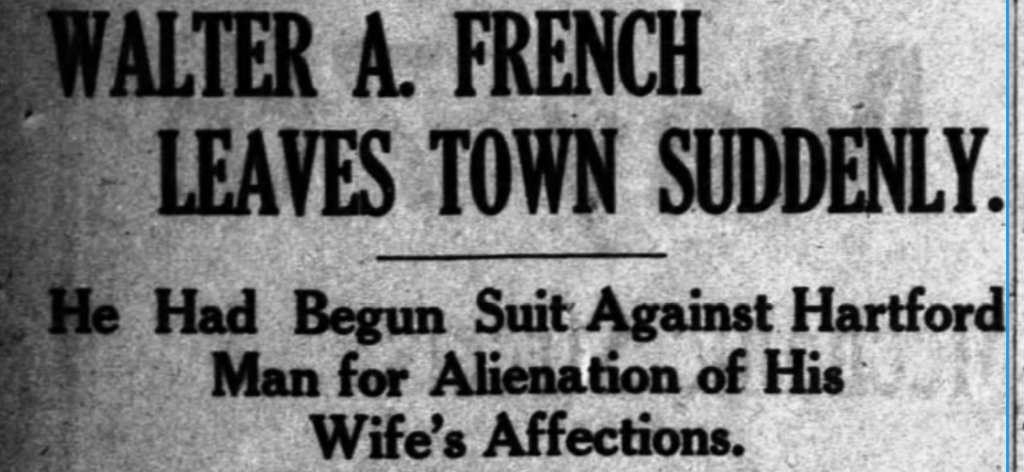
April 1910 – Walter is living in Red Bank, New Jersey with his son, Walter Jr. Walter files a $25,000 lawsuit against Dr. Charles Froelich for “alienation of his wife’s affections.” Walter skips town in dark of night without paying his rent.
(click to read)
May 1910 – After being requested by the court to clarify the date of his “marriage” to Sadie Thayer and if he was legally divorced from Minnie, Walter drops the case.
The last trace of Walter was a September 1918 WW I draft registration card that lists him living in New York City and working as an oil operator.
What about Sadie? By 1915, Sadie had returned to Brooklyn with her son Walter C. and was running a boarding house with 14 tenants. In 1918, she married Michael Schroeder, an immigrant from Luxembourg and they had a daughter (Dorthy) together. Sadie passed away in 1944.
Notes/Questions:
While the article (Declares Red Bank) closes by stating that Sadie and George have a little daughter, all evidence points that it should have stated they had a little son, not a daughter.
Did my grandfather, George, ever know he had a half brother?
Comments, corrections and and suggestions appreciated.
Connecticut “the Georgia of the North” – Witness to Slavery
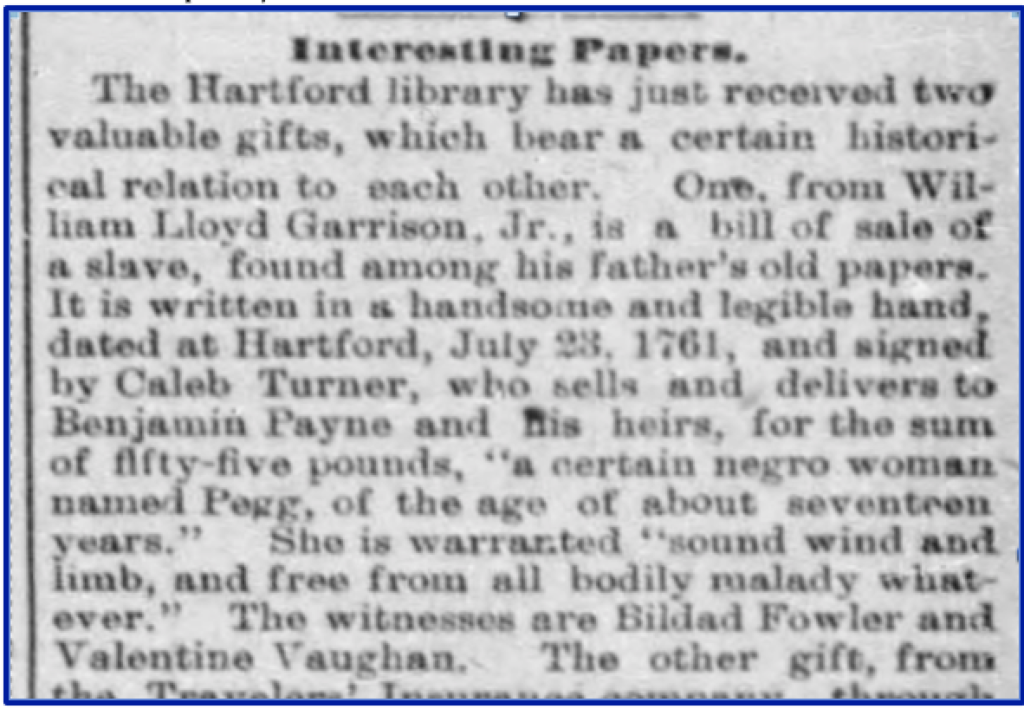
The above clipping from the Hartford Courant makes reference to my 4th great-grandfather, Bildad Fowler, witnessing a bill of sale for the purchase of a slave (Pegg) in 1761 in Hartford, Connecticut. Bildad was a local farmer who later served in the Revolutionary War, he was not a slave owner. Just how and why he was present at the time to witness the signing of this document is not documented.
At the time of the American Revolution, Connecticut had more enslaved Africans than any other state in New England. In 1784 Connecticut passed an act of Gradual Abolition, which stated that those children born into slavery after March 1, 1784 would be freed by the time they turned 25. It did not free the mother, the father, or any other adults. (From the State Historian: Connecticut’s Slow Steps Toward Emancipation)
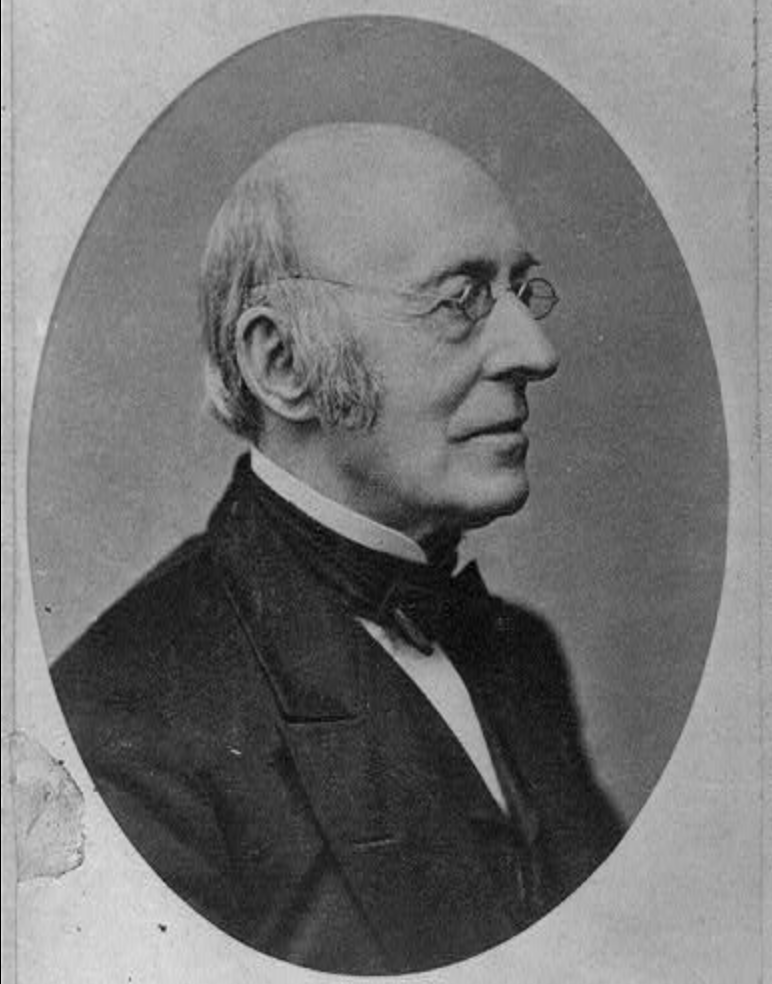
The bill of sale, donated to the Hartford Library, was in the papers of William Lloyd Garrison, a leading white abolitionist and founder of the influential American Anti-Slavery Society “In defending the rights not only of enslaved Americans in the 19th century, but also women and Native Americans, William Lloyd Garrison modeled activism that just as easily applies to the 21st century. “(Article on the Saturday Evening Post) Quote by Garrison – Connecticut “the Georgia of the North”
Who’s Who in the Bill of Sale?
Caleb Turner (Sold Pegg to Benjamin Payne) – Records indicate that Turner owned at least 5 slaves in Hartford during this time period.
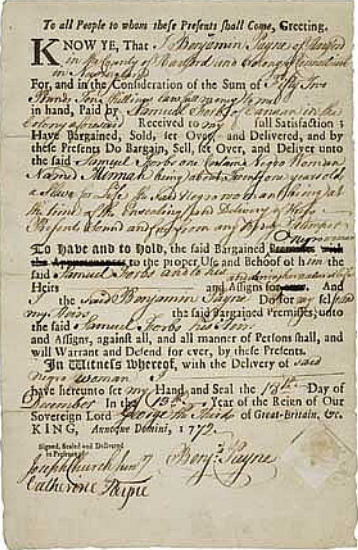
Benjamin Payne (Purchased Pegg) – Benjamin Payne is also on record in 1772 as selling to Samuel Forbes of Canaan in the colony of Connecticut one Negro woman by the name of Minnah, about twenty-one years old, for the sum of fifty-two pounds, ten shillings (right. bill of sale). Payne, a lawyer, was a deputy to the Connecticut General Assembly, clerk for the House and the Governor, and during the Revolutionary War was a member of the Council of Safety, Committee of Correspondence and Committee of Prisoners. Below is an reward issued by Payne for the return of a capture British soldier.
Connecticut Courant Newspaper – May 12, 1777
Runaway: Michael Burn, Hartford, CT. Reward: Not Specified
Transcription: Escaped from the barrack at Hartford last night, one Michael Burn, belonging to Col. Brown’s brigade in the British service, lately taken at Danbury: He is a native of Ireland, about 35 years of age, 5 feet 8 inches high, sandy short hair, […] on the fore part of his head, grey eyes, a little glaring, red complexion, thin visage, large nose, a weaver by trade, speaks very harsh, pretends to a smattering of Latin and Greek, has a comfortable number of books with him, among which are Homer’s Illiad, Ovid’s Metamorphosis, Lillia’s Grammar, &c. He wore off a snuff colour’d coat and vest, white drilling […]. Whoever apprehends said deserter and returns him to Hartford, shall receive a proper reward, and necessary charges paid, by BENJAMIN PAYNE, Committee for Prisoners. Hartford, April 9, 1777.
Valentine Vaughn (Witness) – The only reference to Valentine that I discovered was from May 1766. To celebrate the repeal of the Stamp Act, “a number of young gentlemen were preparing fire works for the evening, in the chamber of the large brick school house, under which a quantity of powder granted by the Assembly for the purposes of the day, was deposited. Two companies of militia had just received a pound a man, by the delivery of which a train was scattered from the powder cask to the distance of three rods from the house, where a number of boys were collected, who undesignedly and unnoticed, set fire to the scattered powder, which was soon communicated to that within doors, and in an instant reduced the building to a heap of rubbish(six dead), and buried the following persons in its ruins, …Valentine Vaughn had his skull terribly broken. (A Celebration Turned Tragic)
Comments, corrections and and suggestions appreciated.
Recently, I shared a humorous exchange with friends about boys (or families) in the neighborhood who your parents encouraged you to not to hang out with, in this case the Murphy, Reilly and Dugan boys. What is true today was true in mid-17th century Ipswich, Massachusetts where my 7th great-grandfather, Joseph Fowler, was known as “a lawless and defiant disturber of the public peace.” (Source: Records and Files of the Quarterly Courts of Essex County, Massachusetts Volume 1)
The Kimball’s were the brothers of his wife Martha. Joseph’s wife, Martha Kimball Fowler.
A brilliant blog post entitled, “Drunkards, liars, a hog, a dog, a witch, disorderly persons and the innkeeper” (Historic Ipswich Blog), notes that “the real trouble-makers in town (were); Joseph Muzzy (a great-uncle), Mark Symonds, Thomas Cooke, Thomas Scott, and especially Joseph Fowler (my 7th great-grandfather).” I encourage you to read the entire post to get a full picture of Ipswich in the mid-17th century. (Excerpt below)
Joseph Fowler“a lawless and defiant disturber of the public peace.”
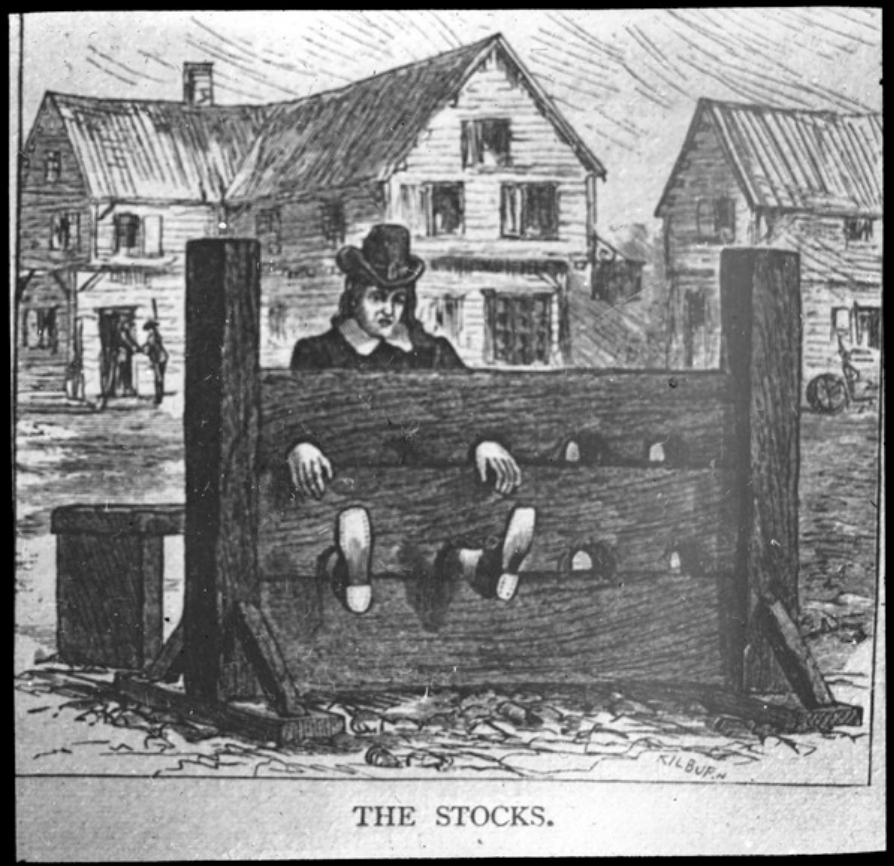
Those are the words of Thomas Franklin Waters in Ipswich in the Massachusetts Bay Colony. Waters noted that Joseph Fowler was sentenced to pay a considerable fine or sit in the stocks on lecture day, for saying there were seven or eight liars in the church and asking why they were not cast out, and for saying “if one would lye soundly he was fit for the church.”
Joseph Fowler was problematic even in his military training, which was a requirement of all young men in those early days. Waters wrote that “More than once, irrepressible Joseph Fowler was disrespectful to the haughty (General) Denison, and for each offense in 1647 and in 1648, he was summoned to the head of the company, and then and there made humble acknowledgment in such terms as the Major required.”
(Joseph Fowler (b.1626) died on May 19, 1676 at the Battle of Great Falls/Massacre at Peskeompskut (now Turners Falls, Massachusetts) during the King Phillip’s War)
Bonus – The post also tells us about John Bradstreet who was convicted of witchcraft based on claims that he had “familiarity with the devil” and for “bewitching a dog.” John was the nephew of my 10th g-grandmother Bridget and Joseph Fowler’s cousin. By the way, Bradstreet was charged with witchcraft based, in part, on testimony provided by —–Joseph Fowler! The dog was hung as a witch (Bewitched Dogs), John escape to New Hampshire.
Comments, corrections and and suggestions appreciated.
I recently posted a story entitled, The Shot Heard Round Buckman Tavern that chronicled my family connection to the famous tavern on Lexington Green in Massachusetts. This story is about my 10th great-grandfather Roger Mowry (1610-66) who ended up owning and operating a tavern and inn in Providence, Rhode Island.
In 1628, Roger sailed from England aboard the ship Abigail, a small sailing vessel with only 13 passengers, arriving in Massachusetts Bay and then residing in Salem.
In 1636/7, Roger was appointed by the town of Salem to serve as a neat-herd! Pray-tell us, what is a neat-herd?
In 1649, Roger and his wife Mary (Johnson) moved to Providence, in the Colony of Rhode Island, were they joined Puritan minister Roger Williams. By 1640 nearly 40 families were living in Providence, where they by oath declared that religious freedom and separation of church and state would be among their guiding principles. (Liberty of Conscience)
In 1653, the Court of Providence appointed him to keep an inn and tavern. The Roger Mowry House/Tavern was the gathering place for town meetings and where tradition says Roger Williams held prayer meetings. Below is a description of the Roger Mowry House.
Note: Roger Williams blamed my 9th great-grandfather John Cotton for his banishment from the Massachusetts Bay Colony.
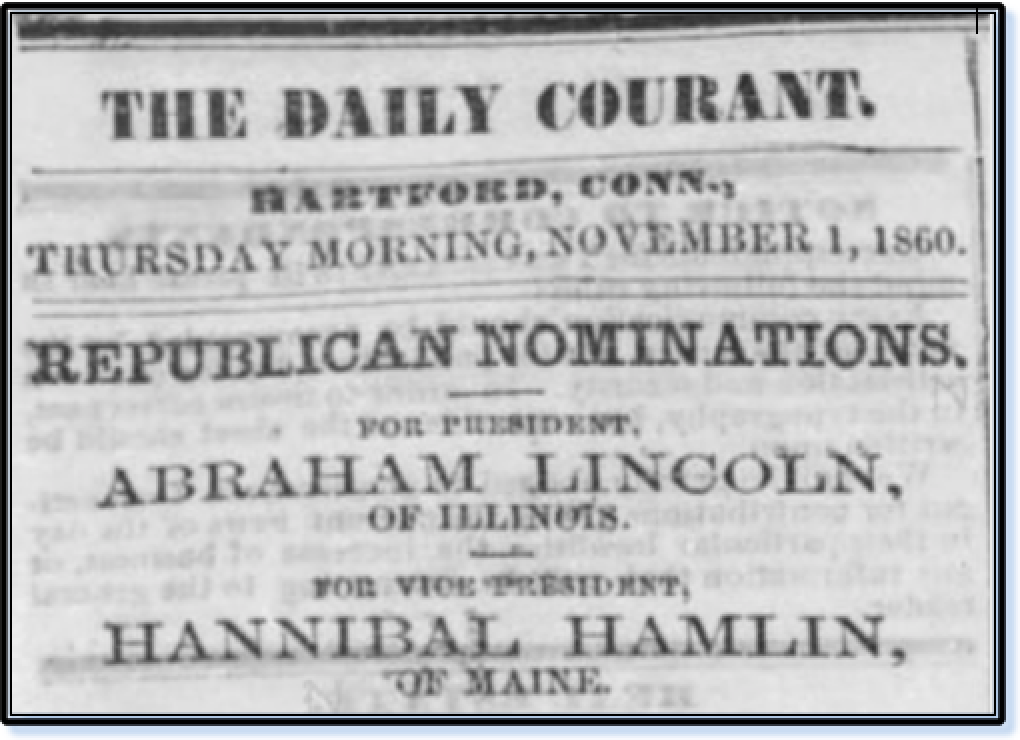
My 3rd great-grandfather, Abiram Spencer (1812-1871) has been the subject of several of these posts. One area that I had not previously touched on was his involvement in politics. In the spring of 1860, Abiram was elected to serve on the Hartford City Council. (Left: Hartford Courant, April 9, 1860, p. 1)
Wherever the fight is hottest, there is their post of duty, and there the Wide Awakes are found.”
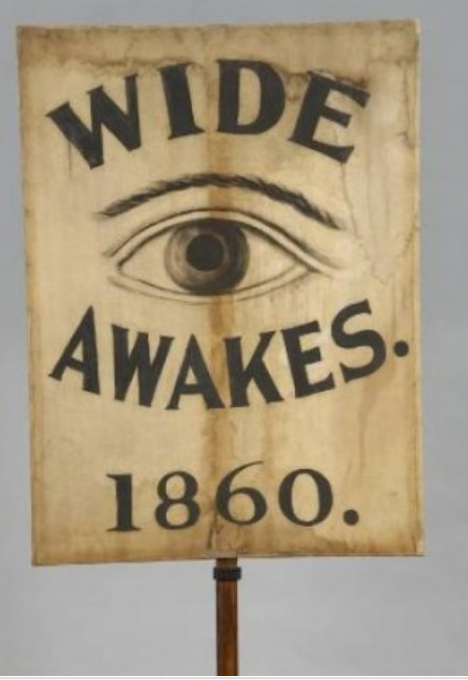
On March 5, 1860, presidential candidate Abraham Lincoln stopped in Hartford to give a speech denouncing the spread of slavery in the western territories and advocating for the right of workers to go on strikes. A handful of store clerks who had just organized a local pro-Republican political group attended the speech and volunteered to escort Lincoln back to his hotel room by torchlight, sparking the birth of a new political movement called the Wide Awakes. July 26: The “Wide Awakes” Rally for Abraham Lincoln in Hartford (Today in Ct. History)
It is amazing to think that Abiram Spencer was present at this speech by presidential candidate Abraham Lincoln. Perhaps as a Republican candidate for the City Council, he even had the honor to meet and shake the hand of the future president!
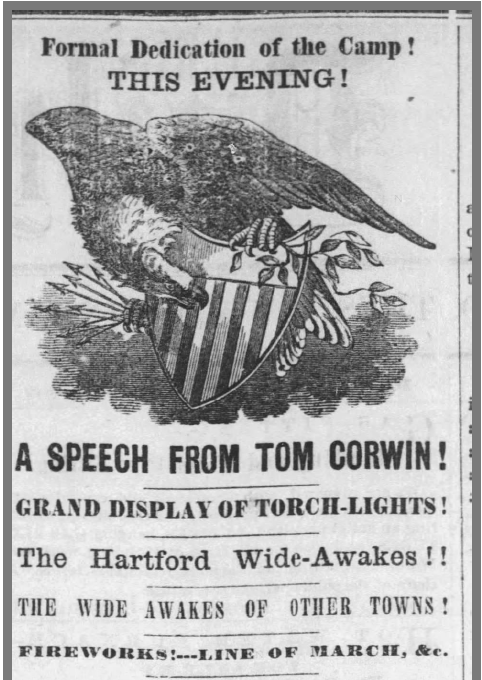
Later that same month (March 27), the Hartford Courant announced “A Grand Display of Torch-lights – The Hartford Wide-Awakes – Fireworks.” and listed Abiram Spencer as an appointed Marshal for the event. The featured speaker was former Ohio Governor and Senator Tom Corwin. After Lincoln was elected, he appointed Corwin as Minister to Mexico, a post that he held from 1861 to 1864.
What was the impact of the the Hartford Wide-Awakes and the Wide Awakes movement?
“It is clear, however, that the Wide Awakes fundamentally altered the tone of the campaign. They took a muddled political environment and turned it into one of the most excited elections in American history. Through marches, speeches, editorials, advertisements, cartoons, jokes, and brawls, the Wide Awakes triggered massive popular enthusiasm in the summer and fall of 1860.”Wide Awake In 1860 America: In Search of Young Men For Voting and Fighting.
Comments, corrections and and suggestions appreciated.
(246th Anniversary) The Shot Heard Round Buckman Tavern
The header for my blog features a painting by American academic realist painter Don Troiani and is titled “Lexington Common.” The painting captures the emotions of the local militia as they prepared to meet the British in Lexington, Massachusetts on the 19th of April 1775. (Mr. Troiani kindly gave me permission to feature his amazing work).
I choose the painting to honor my 5th great grandfathers Joseph Simonds and Joel Viles, two of the seventy-seven men of Captain John Parker’s Company of Lexington Militia who stood bravely before the vanguard of 800 advancing British regulars.
As the British advance guard assembled on the Lexington Common, Captain Parker, vastly outnumbered, ordered his company to disperse. A shot was fired (historians debate who fired the shot) and the British then fired several quick volleys killing 8 and injuring 10 militia. This brief skirmish is regarded as the first exchange of gunfire in the Revolutionary War.
Battle of Lexington by Hammatt Billings Boston: Smith & Knight, 1861, Scottish Rite Masonic Museum, Lexington, MA
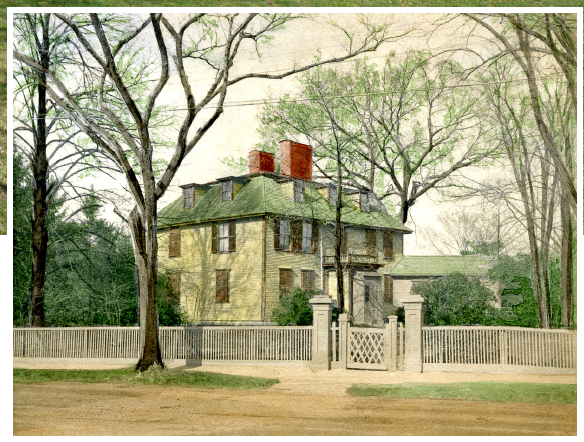
Buckman Tavern – In this later print of the Battle of Lexington (above), Buckman’s Tavern can be seen in the background (left-middle) on the edge of Lexington Green. The initial construction of the tavern was started between 1709-13 by my 7th great-grandparents John Muzzy and wife Elizabeth Bradshaw on land conveyed to him by his father Benjamin. Following is a brief history of Buckman Tavern, which is still standing and a furnished historic site with audio tour and exhibit space managed by the Lexington Historical Society.
The Buckman Tavern is most renowned for its role in the events of April 19, 1775. However, the site is important in other ways. It has been a notable presence in Lexington since it became a tavern in 1713, shortly after it was built. As a “Public House of Entertainment,” the Tavern was faithfully tended by John Muzzy from 1713 to about 1755, *Samuel Stone from 1764 or earlier to 1768, John Buckman from 1768 to 1784, **Joseph Simonds from 1784 to 1794, and Rufus Meriam from 1794 to about 1815 when the building ceased to be used as a tavern. (Source: Historic Structure Report – Buckman Tavern, Lexington Historical Society)
*Samuel Stone, my 6th great-grandfather, married to Jane Muzzy, the daughter of John.
**Joseph Simonds, my 5th great grandfather who fought in the Battle of Lexington, married to Elizabeth Stone, the daughter of Jane and Samuel Stone.
Side Note: After Samuel Stones death, his wife Jane sold the tavern to John Buckman (hence Buckman Tavern) who was the husband of Ruth Stone (who I am guessing was her sister-in-law?)
Comments, corrections and and suggestions appreciated.
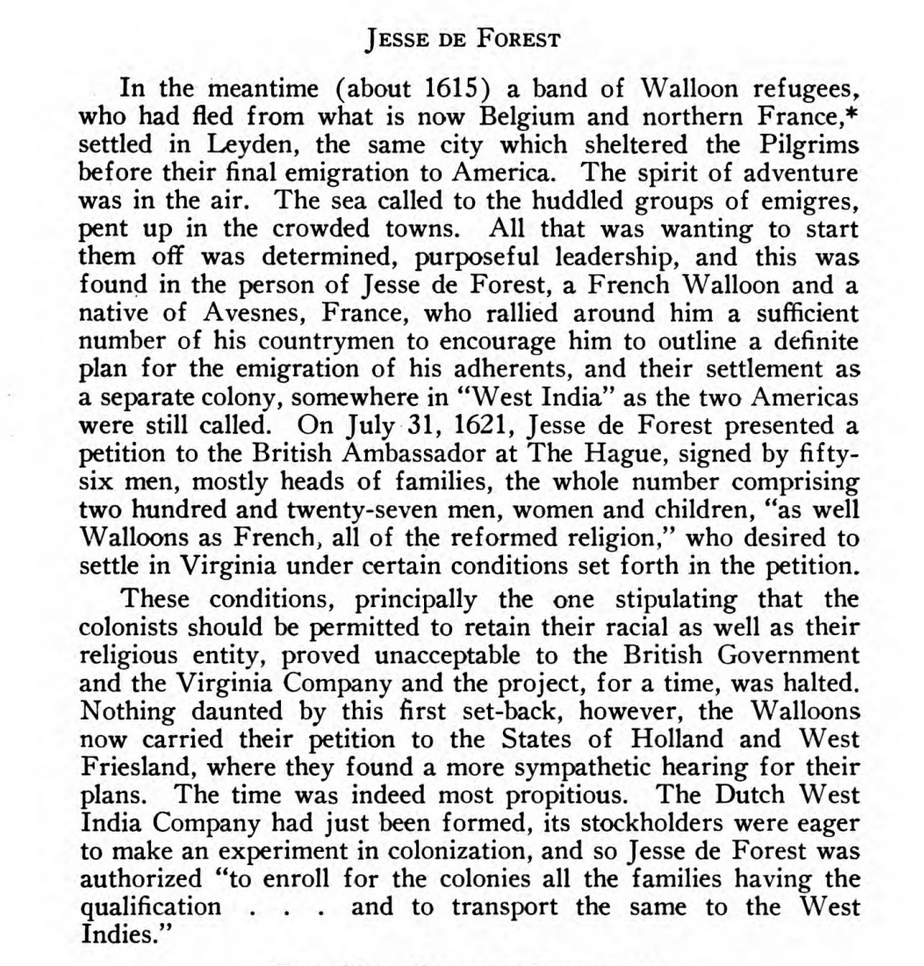
Huguenots were French Protestants in the 16th and 17th centuries who followed the teachings of theologian John Calvin. France and other European counties during this period were seeking to forcibly convert Protestants back to Catholicism. To escape persecution, many members of the Protestant Reformed Church of France and southern Belgium (Wallonia) fled to the United Provinces of the Netherlands. French speaking Protestants from southern Belgium are commonly referred to as Walloons.
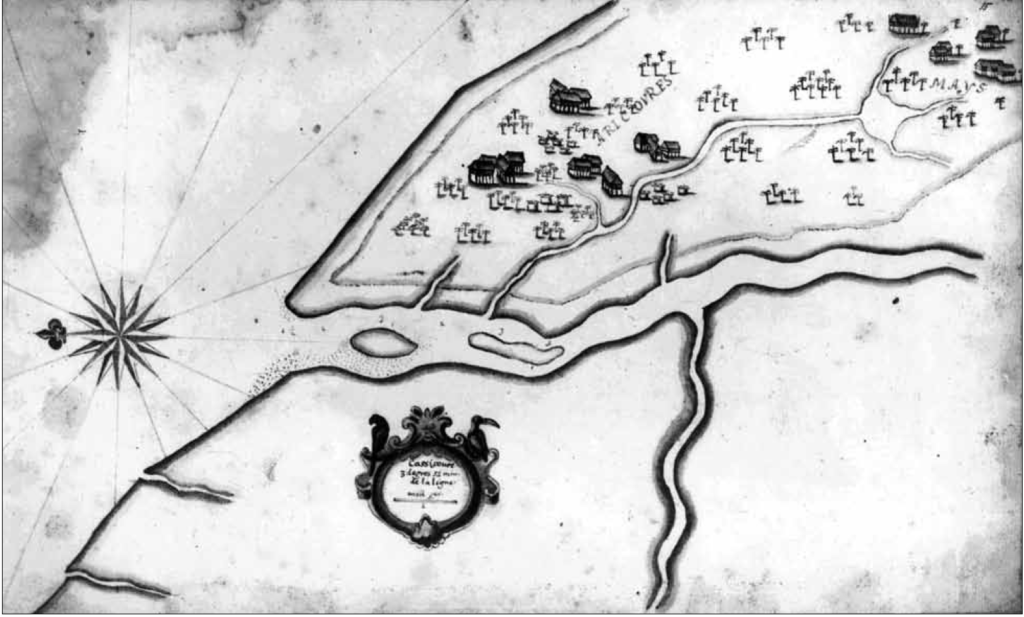
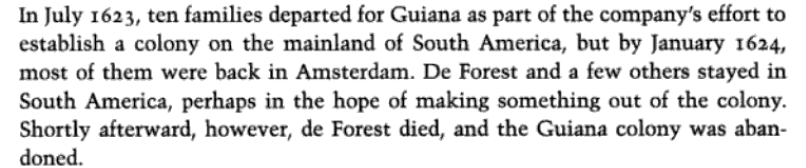
The Huguenot merchant referenced in the excerpt above is my 11th great-grandfather Jesse de Forest. Jesse was born in 1576 in France, fled to the Netherlands and died in the Guianas (north-central coast of South America) in 1624. His life was full of hardship, adventure and a quest for religious and economic freedom.
It is very likely that Jesse knew and met with the Pilgrim Fathers (Plymouth Colony) while he was residing in the municipality of Leiden in the Netherlands. He is also recognized as the the force behind the settlement by 30 Huguenot/Walloon families of present-day Manhattan by the West India Company in 1624.
The following excerpts weave an amazing story about the life of Jesse de Forest.
The Huguenot-Walloon New Netherland Commission. Celebration of the 300th anniversary of the settling in New Netherland of Walloons (French and Belgian Huguenots) by the Dutch West India company, in 1624.
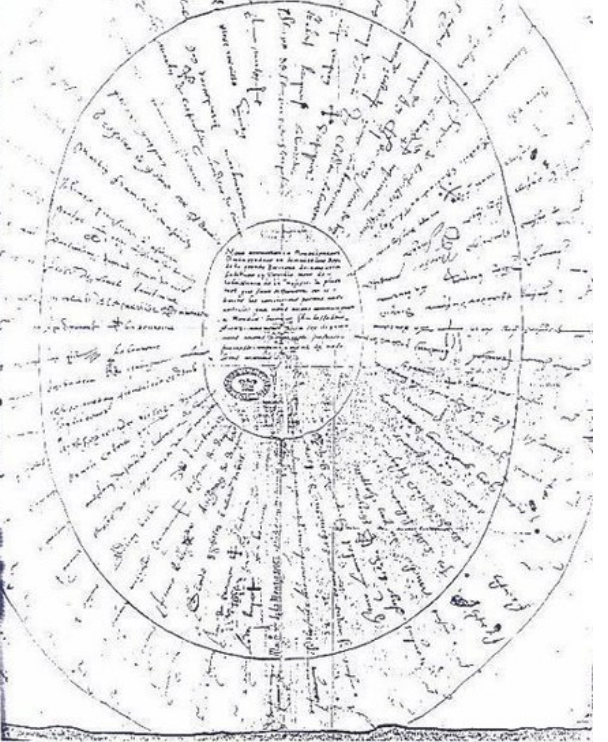
‘Round Robin for Freedom’
The petition mentioned in the excerpt above is referred to as the ‘Round Robin for Freedom‘. (Translated: “We promise my Lord Ambassador of the Most Serene King of Great Britain to go and inhabit in Virginia, a land under his Majesty’s obedience, as soon as conveniently may be, and this under the conditions to be carried out in the articles we have communicated to the said Ambassador, and not otherwise, on the faith of which we have unanimously signed this present with our sign manual.”











 The Buckman Tavern is most renowned for its role in the events of April 19, 1775. However, the site is important in other ways. It has been a notable presence in Lexington since it became a tavern in 1713, shortly after it was built. As a “Public House of Entertainment,” the Tavern was faithfully tended by