Grace Family of Rockfall




Below is a wonderfully story written about Dennis and George Maloney (my 4th and 3rd great-grandfathers) by Jim St. Clair, a teacher and historian who resides in Cape Breton, Nova Scotia. I had the pleasure to communicate with Mr. St. Clair and just missed an opportunity to visit with him during a memorable family vacation to Nova Scotia in 2013.
(Link to my post: From Scotland to Nova Scotia – A post about the MacEachern, MacLeod and MacPherson families).
A Young Man in Search of Home – Victoria Standard – September 2013

© David R. French and French in Name Only, 2019. Unauthorized use and/or duplication of this material without express and written permission from this blog’s author and/or owner is strictly prohibited.
The following is a brief story about my maternal great-uncle, Sargent Joseph Aloysius Grace (1892-1918) of Middletown, Connecticut, who died on October 11, 1918 during the Meuse-Argonne Operation in World War 1. Joseph enlisted in August 1917 and was serving in the III Corps – 4th Infantry Division – 7th Infantry Brigade – 39 Infantry Regiment (AAA-O) – HQ Company at the time of his death in 1918.
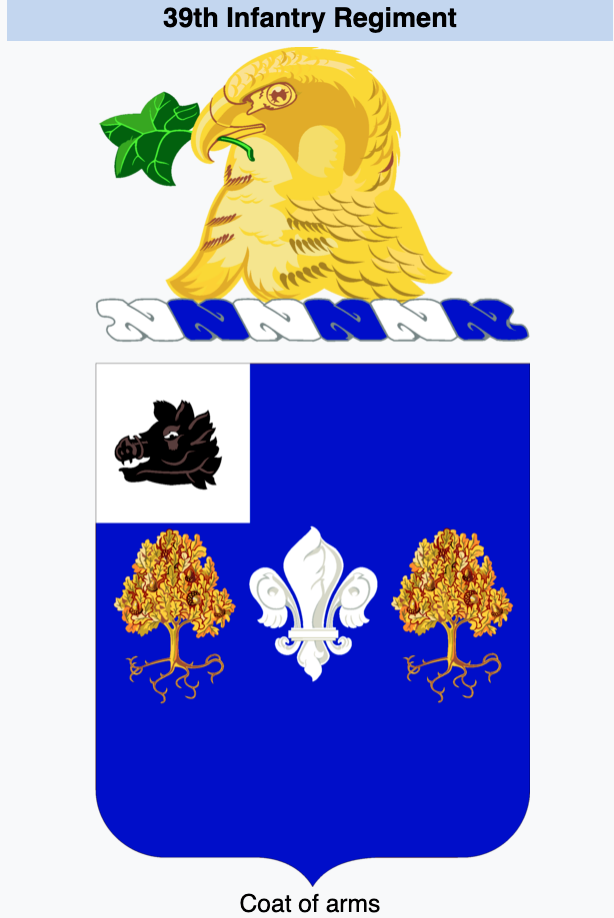
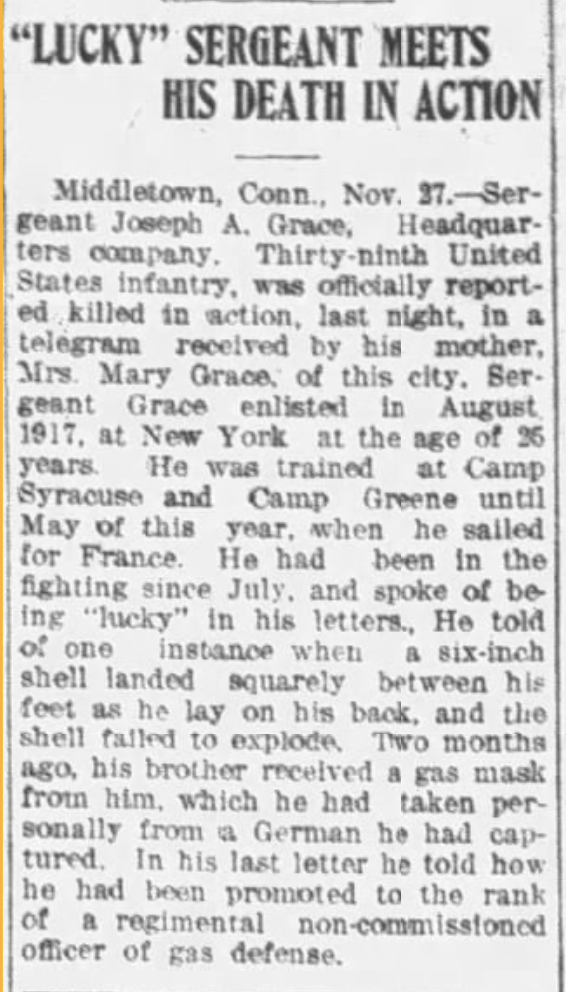
While Joseph’s cause of death is not stated, American Expeditionary Force (AEF) order of battle reports from that day note that “early on the morning of the 11th, the entire regimental staff of the 39th was gassed.” If Joseph was assigned to headquarters, it can be assumed that he was among those who died that morning. Ironically, a news article (below-left) announcing his death, states that he had been recently promoted to be the regimental non-commissioned officer of gas defense (27 Nov 1918 – Meriden Journal). The use of chemical weapons was deployed heavily by both sides during the campaign.
The Meuse-Argonne Offensive was the largest operation of the American Expeditionary Force (AEF) during World War and remains the deadliest American troops have ever fought. The AEF launched its massive offensive on September 26, 1918 along a twenty-four-mile front from the Argonne Forest to the Meuse River—a long strip of rolling hills and wild woodland about 150 miles east of Paris. One month to the day after Joseph’s death, an Armistice was signed between the Allies and Germany on 11th November 1918, bringing an end to the First World War.
The Meuse-Argonne Offensive was the largest operation of the American Expeditionary Force (AEF) during World War and remains the deadliest American troops have ever fought. The AEF launched its massive offensive on September 26, 1918 along a twenty-four-mile front from the Argonne Forest to the Meuse River—a long strip of rolling hills and wild woodland about 150 miles east of Paris. One month to the day after Joseph’s death, an Armistice was signed between the Allies and Germany on 11th November 1918, bringing an end to the First World War.
Meuse-Argonne Offensive – September 26 and November 11,1918
AEF – 26,277
killed and 95,786 wounded
German –
28,000 killed and 92,250 wounded
Sources:
The History of the 39th U. S. Infantry during the World War (p.81-83)
The Use of Gas in the Meuse-Argonne Campaign
© David R. French and French in Name Only, 2024. Unauthorized use and/or duplication of this material without express and written permission from this blog’s author and/or owner is strictly prohibited.
Comments/Reviews
Appreciated!
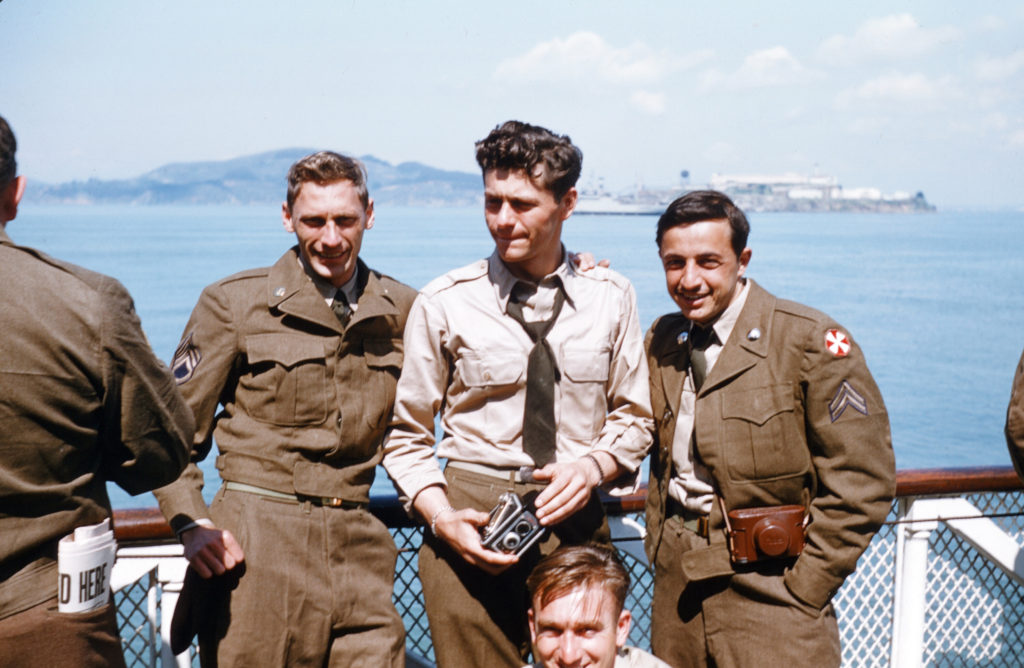
This photograph, taken by my father John Spencer French, shows his buddies Louis Zieminski and Patsy Ruggiero. John passed away in 2014, Pasquale “Patsy” died in Florida in 2013 and Louis in 2004 in Wallingford, CT.


Copyright © 2019. All Rights Reserved by David R. French.
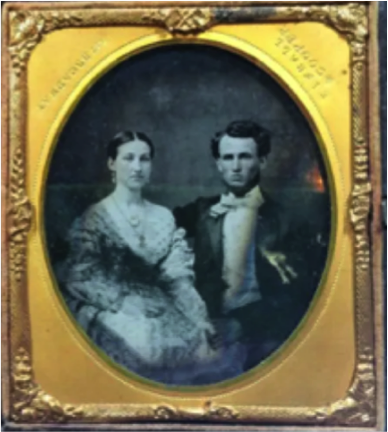
Part II – This post offers several more newspaper clippings from the Hartford Courant about life on the farm in Bloomfield, Connecticut featuring my second great-grandfather, John William Spencer (1834-1896). The topics of the articles range from corn and pumpkins to snakes and rabid dogs!
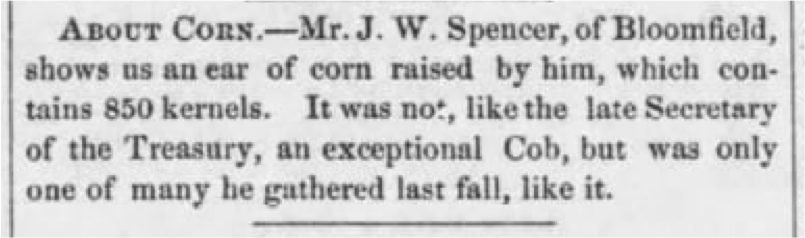
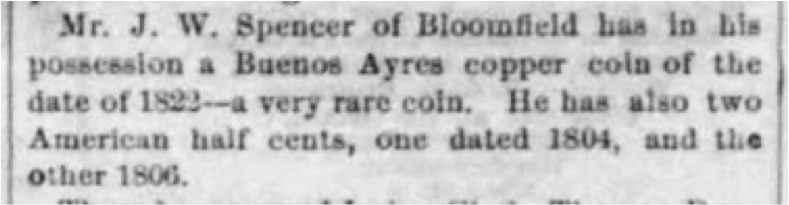
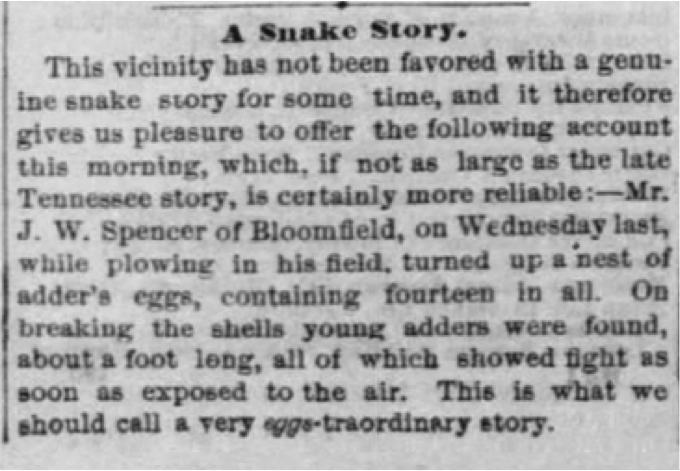
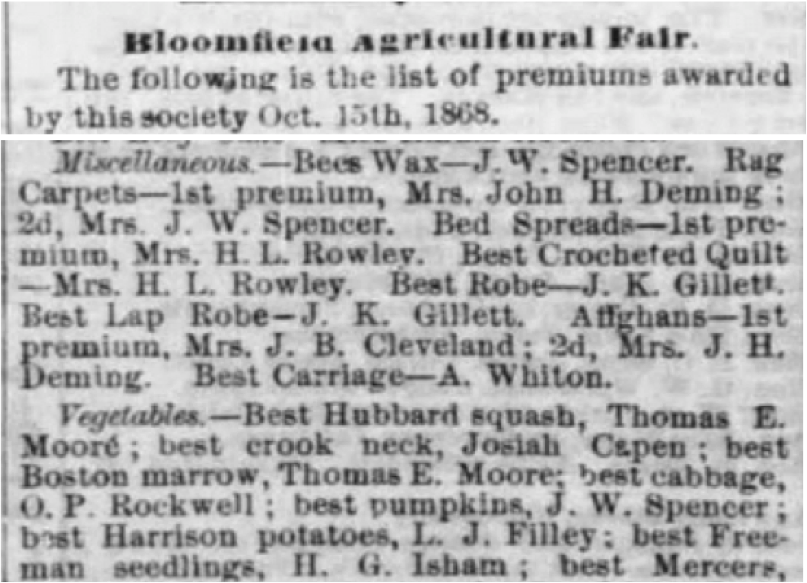
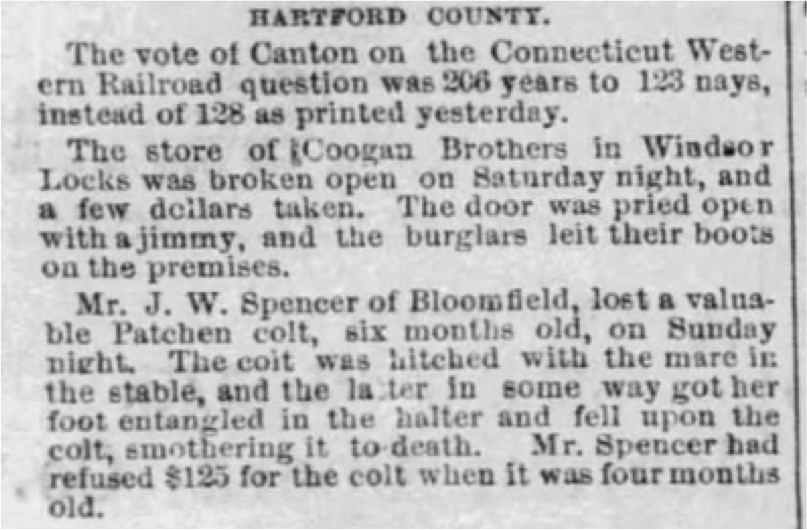
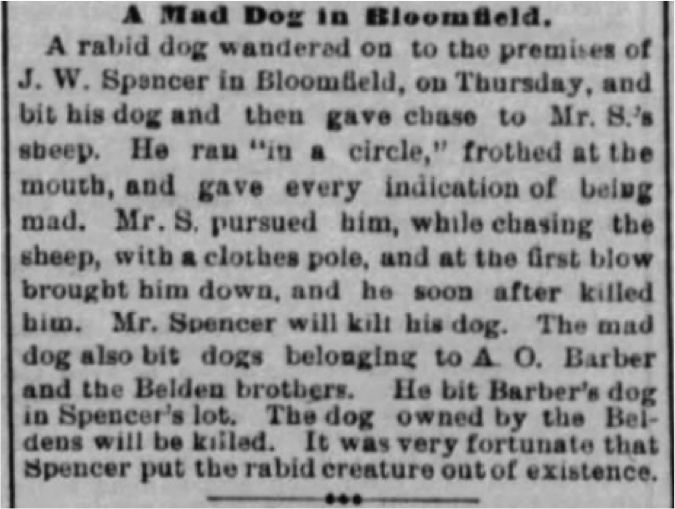
Part I – I’ll Say it Again, Those are My Nuts!
If you are interested in researching your family history, newspaper accounts can provide a wealth of information. The above referenced clippings were discovered through Newspapers.com by Ancestry.
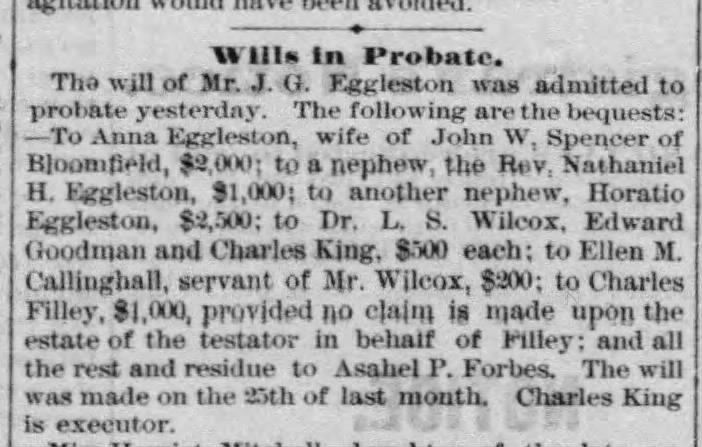
Above is a probate notice from 18 July 1878 that notes a bequest of $2,000 from Jason Goodwin (J.G.) Eggleston to his grand-niece Anna Eggleston Spencer. Anna is my second great grandmother. $2,000 in 1879 is equivalent in purchasing power to about $51,351.80 in 2019. Thank you great-uncle! Jason was the co-owner of Eggleston & Rowley Grocery located at 286 Main Street in Hartford, Connecticut.
Link to a previous post about Anna: Introducing Annie and John Spencer
Another benefactor in the will is the Reverend Nathaniel Eggleston who received $1,000. I wrote an earlier post (Rev. Eggleston’s Woods) about Nathaniel who was appointed chief of the Bureau of Forestry (now the United States Forest Service) from 1883-1886.
If you are interested in researching your family history, newspaper accounts can provide a wealth of information. The above referenced clipping was discovered through Newspapers.com by Ancestry.
Copyright © 2019. All Rights Reserved by David R. French.
With genealogical research, it is often a case of feast or famine. With my 2nd great-paternal grandfather, John William Spencer (1834-1896), I have discovered a wealth of material. In a previous post, Introducing Annie and John Spencer, I described the joy of having someone share John and Annie’s wedding photograph with me.
Recently, researching Hartford newspapers, I came across several wonderful articles that shine a light on the lives of John and Annie.
The article below from 1869 describes a party celebrating John and Annie’s 10th wedding anniversary! Couldn’t they just have mentioned Annie by name?

These “true crime stories” that occurred in Bloomfield Connecticut, involving John W. Spencer, are separated by 26 years!


If you are interested in researching your family history, newspaper accounts can provide a wealth of information. The above referenced clippings were discovered through Newspapers.com by Ancestry.
Copyright © 2019. All Rights Reserved by David R. French
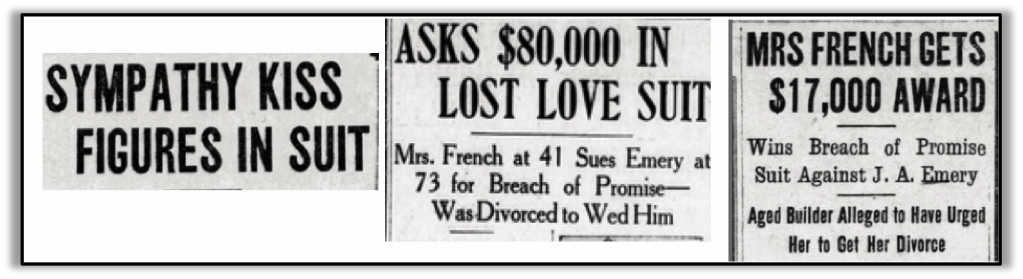
While I hate to admit it, I believe my paternal great-grandmother, Mary “Minnie” MacEachern French, might be viewed as a gold digger. The evidence comes from a sensational series of articles that played out in Boston newspapers from 1916-1918. What is amazing is that a jury found in her favor, although it appears the judge felt greater sympathy for the defendant. Another perspective is that she was just a tough woman who immigrated to the U.S. from Canada and found a way to make life more bearable.
Mary MacEachern was born on April 25. 1877 in Sydney, Nova Scotia, Canada. In April 1897, she married Walter Abraham French, a carriage driver, in Boston, Massachusetts and from this union, my grandfather George Bradley French was born in 1898. Mary and Walter were separated in 1901. At the time of the court case, George was serving in France – Pvt. George B. French – WW1.
Previous Post – Hello Minnie
For the sake of brevity, below are excerpts from numerous stories in Boston newspapers that followed the case of Mary French v. John A. Emery:
Denies He Gave
Promise to Wed – Boston Post · Aug 18, 1916 · Page 7
“I may have put my arm on her shoulder in a friendly way,
but I have no memory of having done so.” John Alvin Emery, 70 years old, the
man who built Boston’s first subway, to a question as to whether he ever hugged
Mrs. Mary R. French, who has brought an $80,00 breach of promise suit against
him.
Sympathy Kiss Figures
in Suit – The Boston Globe · 18 Aug 1916 · Page 1
Subway builder remembers she called him a “dear thing.”
Calls His Relations
Platonic – Boston Post · 24 Sep 1916 · Page 2
He admitted he had loaned her various sums and said she was
continuously wanting money, he loaned it in some cases and declining in others.
Says Aged Builder
Called Her “Sis” – The Boston Globe · 14 Feb 1918 · Page 5
Back Bay Woman Claims She Secured Divorce to Marry Him
Asks $800,000 in Love
Lost Suit – The Boston Globe · 26 Mar 1918 · Page 8

Mrs. French was the first witness call. “I have been a dressmaker since 1906. April 13, 1897, I married Walter A.
French. In 1901, he separated from me”
she said. I first met Mr. Emery in
1906.
…In the latter part of 1906, I noticed a change in his
attitude about me. He seemed to want to
be in my company.
Engagement Party One
Witness Says/Plaintiff Rest in the French-Emery Case – The Boston Globe · 26
Mar 1918 · Page 2
“O’ she does work, but that won’t be for long and when
affairs are settled, I intend to marry her.”
“Never Saw Any
Improper Conduct” – The Boston Globe – Mar 27, 1918 · Page 2
And you never kissed her, or put your arm around her, or
maintained toward her the closest relations a man may maintain towards a
woman?” “I did not.”
Love Letters in Suit
for $80,000 – Boston Post · 27 March 1918 · Page 5
Letters from Mary French to John Emery
(April 11, 1911) My Dear – Just let me call you that just
once. Don’ look cross. You must think I am a queer little
monkey. Well. I suppose I am, to a
certain degree. The Lord meant me for a
good, sweet woman, and although fate has made it pretty hard, as much as I try
to get away from my beginning, it is simply impossible.
(July 8, 1913) …Please see about my electric bill and send
me that stove. I am still short that
$10. Will you send me a letter with that
amount like dear. I am anxious to get
the stove to cook with.
…You won’t turn me out surely. Thanks ever so much, dear. Bless your dear old heart. Good night.
MF
(March 5, 1915) How if I had sued you for breach of promise,
and you know I would win in any court of justice. And really it is not too late, so maybe when
you think it over you will feel different about things.
…I need a great deal of money to meet expenses with, and
this time of year it comes slowly.
(September 11, 1915) Dear Friend – I have waited anxiously
to hear from you. Now you gave me to
understand that I would hear from you on Friday at the latest. Now I am awfully in need of money and you
promised you would help me the Lord knows you are getting off easy with a few
dollars once in a while which you can well afford and a great many more and not
feel the loss of it. If I were like some
women it would cost you thousands and a lot of notoriety, as I don’t think it
is necessary for me to tell you where you stand, and instead you make promises
you don’t intend to keep.
Didn’t Ask Mrs.
French to Wed Him – Boston Post · 28 Mar 1918 · Page 4
Mr. Emery is now 73 and Mrs. French is 41. According to her contention the proposal of
marriage was made 10 years ago.
Mrs. French Gets
$17,000 Award – Wins breach of promise suit against J.A. Emery.
The Boston Globe · 29
Mar 1918, P. 16
She said she called frequently and on Nov 22, 1907, when she
was at his home, 111 Boyston St., to
consult him about buying dressmaking stock, he proposed marriage. At the time she was married to Walter A.
French and he said it was easy to get a divorce.
Mrs. French Asks New
Trial After Her $17,000 Verdict – The Boston Globe · 30 Mar 1918, P. 14
(Mrs. French) …has filed through her counsel, Fletcher
Ramsey, a motion for a new trial on the ground that the verdict was not
warranted based on the evidence.
Mrs. French’s Award
Held Up – Boston Post · 2 Apr 1918 · Page 3
$17,000 Verdict
Reduced to $5,000 – The Boston Globe · 3 Apr 1918 · Page 16
Judge White then set the sum at $5,000 and gave Mrs. French
one week in which to accept that ruling.
Obituary – John Emery
– The Boston Globe · 29 Mar 1919 · Page 12
Mrs. Mary R. French (Obituary) Hartford Courant (Hartford, Connecticut) · 22 Apr 1932, Fri · Page 4. Mrs. Mary R. French died Thursday at the home of her son. George B. French, 15 Euclid Street. She was born in Nova Scotia. Besides her son, she leaves behind a grandson, J. Spencer French of Hartford.
If you are interested in researching your family history, newspaper accounts can provide a wealth of information. The above referenced clippings were discovered through Newspapers.com by Ancestry.
Copyright © 2019. All Rights Reserved by David R. French.

As a boy growing up in Wethersfield, Connecticut, I recall two distinct images about our backyard. The first was a weeping willow tree and the second were the massive bloodhounds kept by our neighbor directly behind our yard. What I just discovered was that my father had the neighbor charged and brought to court for “creating a nuisance by harboring barking dogs!” Read the full tale below:
Hartford Courant (Hartford, Connecticut) · 20 Aug 1965


Copyright © 2019. All Rights Reserved by David R. French.